Instagram Content Calendar for Fitness Coaches: A 30-Day TOFU, MOFU, and BOFU Plan
Use this 30-day Instagram content calendar to attract new fitness leads, build trust with your audience, and turn qualified followers into coaching conversations.
 Written by Dylan StottFounder of Kinetic AI
A useful Instagram content calendar does more than remove the daily question of what to post. It gives every post a clear job inside the path from stranger to coaching client.
For fitness coaches, that path usually requires three types of content. Top-of-funnel content helps the right people discover you. Middle-of-funnel content builds connection and trust. Bottom-of-funnel content speaks directly to qualified prospects, shows proof, and gives them a reason to start a conversation.
The 30-day plan below combines all three stages. It is not thirty random fitness ideas and it is not thirty sales posts. It is a balanced system designed to create attention, deepen belief, and produce qualified action over time.
What this 30-day Instagram content calendar is designed to do
The calendar is designed for personal trainers and online fitness coaches who already know the type of client they want to attract and the result their coaching helps create.
Its purpose is to move the audience through a sequence of useful experiences. New people should recognize themselves in the content. Existing followers should understand how you think and why your process is credible. Qualified prospects should see relevant proof and know how to take the next step.
- ✓Attract more of the people who fit your coaching niche
- ✓Build familiarity without relying on constant personal updates
- ✓Demonstrate judgment instead of only sharing generic information
- ✓Show proof that matches the result you sell
- ✓Create natural reasons for qualified people to DM or inquire
- ✓Give every post one primary purpose and call to action
The recommended 30-day content mix
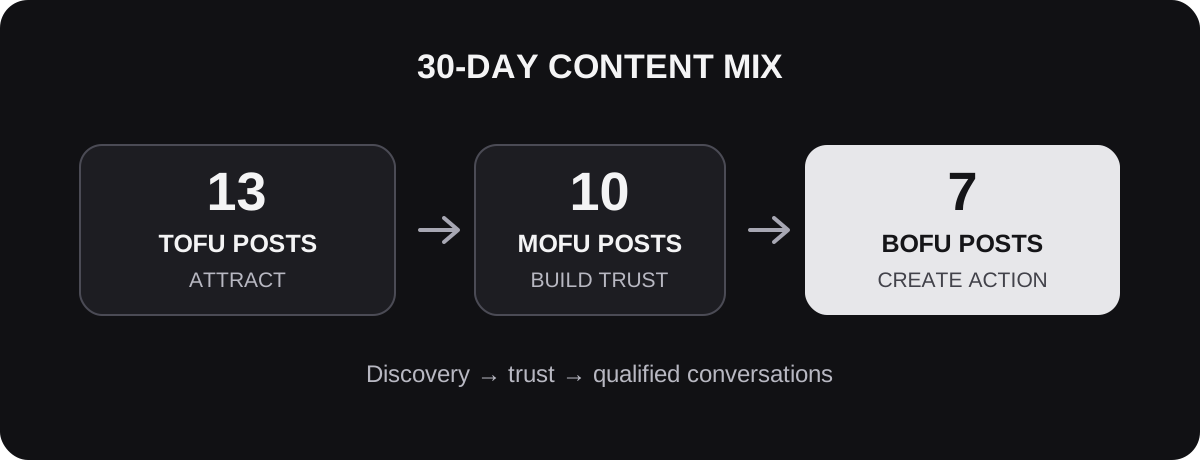
This calendar uses thirteen top-of-funnel posts, ten middle-of-funnel posts, and seven bottom-of-funnel posts. That balance gives the account enough discovery content to keep reaching new people while still creating regular trust and conversion opportunities.
The exact ratio should change with the maturity of the account. A newer account with limited reach may need more TOFU content. An established coach with a warm audience and strong proof may increase BOFU frequency. The important principle is that no stage should disappear completely.
- ✓13 TOFU posts: attention, relevance, discovery, and useful first impressions
- ✓10 MOFU posts: connection, expertise, process, values, and trust
- ✓7 BOFU posts: proof, problem-specific solutions, objections, and direct action
Complete these four decisions before using the calendar
A calendar cannot repair unclear positioning. Before choosing hooks or formats, define the person, problem, result, and offer the content should support.
The prompts below are intentionally simple. If the answers are vague, improve them before producing thirty posts. Clear inputs make every stage of the funnel more specific and persuasive.
- ✓Ideal client: Who should immediately recognize that your content is for them?
- ✓Primary problem: What painful or persistent problem are they trying to solve?
- ✓Desired result: What meaningful change are they actively trying to create?
- ✓Coaching offer: What process and support do you provide to help create that result?
How to use the calendar
Each day includes a funnel stage, a recommended content angle, and a practical example. Replace the example with the language, constraints, and desired outcomes of your own ideal client.
You do not need to publish every post in the exact order shown. The sequence is designed to prevent long stretches of only education, only personal content, or only selling. Preserve the overall mix even when you move individual posts around.
- ✓Choose one primary idea for each post
- ✓Select the format that makes that idea easiest to understand
- ✓Use a call to action that matches the audience's level of intent
- ✓Connect related posts across the month instead of treating each one as isolated
- ✓Track which topics create relevant reach, trust signals, and qualified conversations
Week 1: create relevance and establish your point of view
The first week introduces the audience problem, gives immediate value, and begins explaining how you think. It ends with a direct but useful offer-related post for the people already experiencing the problem.
- ✓Day 1 — TOFU, problem recognition: Five signs your fat-loss plan is too strict for your actual workweek. Format: Reel or carousel. CTA: Save this for your next busy week.
- ✓Day 2 — MOFU, coaching belief: Explain why consistency is often a plan-design problem before it is a motivation problem. Format: talking-head Reel. CTA: Ask which part of the week usually breaks down.
- ✓Day 3 — TOFU, quick win: Share one simple meal, workout, or scheduling adjustment that removes a common obstacle. Format: demonstration Reel. CTA: Try it this week.
- ✓Day 4 — TOFU, myth: Correct one belief that causes the ideal client to make poor decisions. Format: static post or carousel. CTA: Share with someone who still believes it.
- ✓Day 5 — MOFU, behind the scenes: Show how you modify a client's plan when work, travel, family, or recovery changes. Format: screen recording or voice-over Reel. CTA: Ask what adjustment they usually struggle to make.
- ✓Day 6 — TOFU, comparison: Compare two common approaches and explain which fits a specific person or situation. Format: carousel. CTA: Save the comparison.
- ✓Day 7 — BOFU, direct problem solution: Speak directly to the ideal client and explain the three-part process you use to solve one painful problem. Format: talking-head Reel or carousel. CTA: DM a relevant keyword for details.
Week 2: build familiarity and show how your coaching works
The second week moves beyond isolated tips. It helps followers see the coach's decision-making, standards, and process while continuing to introduce new people to useful ideas.
- ✓Day 8 — TOFU, relatable situation: Describe the moment the ideal client usually loses momentum, such as a disrupted Thursday or an unplanned weekend. Format: short Reel. CTA: Comment if this is the part that gets them.
- ✓Day 9 — MOFU, decision breakdown: Walk through how you decide whether to reduce training volume, change exercise selection, or hold the plan steady. Format: carousel. CTA: Save for the next time progress feels slow.
- ✓Day 10 — TOFU, beginner roadmap: Explain the first three actions you would take if you were starting again in the client's situation. Format: carousel. CTA: Follow for the next stage.
- ✓Day 11 — MOFU, personal story with a lesson: Share a relevant mistake or experience that changed how you coach this problem. Format: talking-head Reel or caption-led post. CTA: Ask whether they have made the same mistake.
- ✓Day 12 — TOFU, common mistake: Explain why a popular action is making the problem harder. Format: Reel. CTA: Save before the next workout or meal-prep session.
- ✓Day 13 — MOFU, coaching standard: Explain one thing you refuse to do in your coaching and the reason it protects the client. Format: static post or Reel. CTA: Invite questions about the standard.
- ✓Day 14 — BOFU, case study: Show a client with a similar starting situation, the obstacle, the coaching adjustment, and the measurable result. Format: carousel. CTA: DM RESULTS if they want to know what the process would look like for them.
Week 3: deepen trust and address buying concerns
The third week combines education with evidence. The audience should begin to understand not only what to do, but why your judgment and coaching process may help them do it more effectively.
- ✓Day 15 — TOFU, search-led question: Answer a common question your ideal client repeatedly asks in Google, comments, or DMs. Format: Reel or carousel. CTA: Save the answer.
- ✓Day 16 — MOFU, client problem breakdown: Explain what you would investigate when a client is doing the obvious things but still not progressing. Format: carousel. CTA: Ask which factor they have not checked.
- ✓Day 17 — TOFU, demonstration: Show three versions of one exercise, meal, or habit for different experience levels or schedules. Format: visual Reel. CTA: Share with someone who needs the easier version.
- ✓Day 18 — BOFU, objection handling: Address a real concern such as time, previous failure, online accountability, or fear of another restrictive plan. Format: talking-head Reel. CTA: DM a question privately if the objection still applies.
- ✓Day 19 — TOFU, opinion: State a clear but defensible perspective that helps the ideal client make a better decision. Format: static post or Reel. CTA: Ask whether they agree.
- ✓Day 20 — MOFU, process content: Show what a useful weekly check-in contains and how the information changes the plan. Format: anonymized screen recording or carousel. CTA: Save the checklist.
- ✓Day 21 — BOFU, testimonial with context: Pair a client's words with who they were, what they struggled with, and what changed. Format: carousel or static proof post. CTA: Invite similar prospects to DM COACHING.
Week 4: connect the problem, proof, and offer
The fourth week keeps discovery active while giving qualified followers several clear opportunities to evaluate the offer. The goal is not pressure. It is enough clarity and proof for the right person to make a decision.
- ✓Day 22 — TOFU, checklist: Share a short self-assessment that helps the audience identify where their plan is breaking. Format: carousel. CTA: Save and score the checklist.
- ✓Day 23 — MOFU, values and expectations: Explain what you expect from clients and what they can expect from you. Format: talking-head Reel or carousel. CTA: Ask which expectation matters most.
- ✓Day 24 — TOFU, quick win: Solve one small but recurring problem connected to the larger coaching outcome. Format: Reel. CTA: Try it today.
- ✓Day 25 — BOFU, offer explanation: Explain who your coaching is for, the problem it solves, the process, and who it is not for. Format: carousel or pinned Reel. CTA: DM FIT to discuss whether the offer matches their situation.
- ✓Day 26 — TOFU, before-and-after decision: Compare the old approach and the better approach without using a client transformation. Format: split-screen Reel or carousel. CTA: Share with someone stuck in the old approach.
- ✓Day 27 — MOFU, FAQ: Answer one detailed question people ask before becoming clients, including the tradeoffs and limitations. Format: Reel. CTA: Invite the next question.
- ✓Day 28 — BOFU, client journey: Show the starting problem, early adjustment, first win, obstacle, and current result from one client story. Format: carousel. CTA: DM START if they want help creating their first phase.
Days 29 and 30: review the month and create action
The final two posts should reinforce the most valuable lesson from the month and give high-intent followers a clear next step. They also create a natural transition into the next month's content.
- ✓Day 29 — MOFU, monthly synthesis: Combine the month's recurring lessons into a simple framework, such as the three reasons the ideal client's plan succeeds or fails. Format: carousel. CTA: Save the framework.
- ✓Day 30 — BOFU, direct invitation: Describe the exact person you can help, the problem you help solve, and the next step to discuss coaching. Include a real proof point when available. Format: direct-to-camera Reel or static offer post. CTA: DM the chosen keyword or apply through the profile link.
The calendar at a glance
Across the full month, TOFU content appears often enough to create discovery, MOFU content repeatedly builds familiarity and trust, and BOFU content gives qualified people regular opportunities to evaluate the coaching offer.
This structure prevents a common problem: building an audience that receives useful tips but never understands the coach, the process, the proof, or the path to becoming a client.
- ✓TOFU: Days 1, 3, 4, 6, 8, 10, 12, 15, 17, 19, 22, 24, and 26
- ✓MOFU: Days 2, 5, 9, 11, 13, 16, 20, 23, 27, and 29
- ✓BOFU: Days 7, 14, 18, 21, 25, 28, and 30
How to choose the right format for each post
The funnel stage does not determine the format. The idea determines the format. Choose the medium that makes the message easiest to understand and believe.
A demonstration may need video. A case study usually benefits from a carousel. A direct point of view may work as a simple static post. A personal explanation or objection response often becomes stronger when the audience can see and hear the coach.
- ✓Reels: demonstrations, relatable scenarios, personal explanations, opinions, and objections
- ✓Carousels: frameworks, comparisons, case studies, checklists, and step-by-step breakdowns
- ✓Static posts: one clear belief, proof statement, diagnostic idea, or direct offer message
- ✓Stories: daily context, interaction, follow-up, behind-the-scenes detail, and direct replies
Add a simple Stories rhythm behind the feed calendar
Feed posts create structured assets that can continue reaching and educating people. Stories create repeated, lower-friction contact with the audience already paying attention.
Use Stories to continue the same daily topic rather than inventing a second unrelated content strategy. Show one additional example, ask one question, share one relevant client moment, or explain one detail that did not fit in the feed post.
- ✓One behind-the-scenes update connected to the day's post
- ✓One poll, slider, question box, or reply prompt
- ✓One useful explanation, example, or client insight
- ✓One proof or offer Story on selected BOFU days
- ✓One direct response to audience feedback when a question repeats
Related reading
How to write calls to action that match the funnel stage
The call to action should feel like the next reasonable step after the content. A cold viewer may be ready to save or follow. A warm follower may be ready to reply or request a resource. A qualified prospect may be ready to discuss coaching.
Using the same direct sales CTA on every post creates unnecessary friction. Using only soft engagement CTAs prevents high-intent people from knowing how to act. Match the ask to the job of the post.
- ✓TOFU CTA: save, share, follow, view the profile, or try the quick win
- ✓MOFU CTA: reply, answer a question, request a deeper resource, or continue into a related post
- ✓BOFU CTA: DM a specific keyword, apply, book a call, or ask whether the coaching fits
How to batch the month without making every post feel identical
Batching works best when you batch decisions and production separately. First choose the audience problems, funnel stages, and content angles. Then group the posts by production type.
Recording ten talking-head videos in one session can save time, but identical framing, delivery, and structure may make the feed repetitive. Change locations, pacing, examples, and visual treatment while keeping the underlying strategy consistent.
- ✓Planning block: select all thirty topics, stages, and CTAs
- ✓Writing block: create hooks, outlines, and carousel copy
- ✓Recording block: film demonstrations and talking-head content in groups
- ✓Design block: build carousels, static posts, and proof posts
- ✓Scheduling block: arrange the final mix and prepare Story follow-ups
How to reuse one topic across TOFU, MOFU, and BOFU
You do not need thirty unrelated subjects. One important client problem can support several funnel stages because each stage answers a different question.
For example, consider a coach who helps busy professionals lose weight despite inconsistent schedules. The TOFU post helps people recognize the scheduling problem. The MOFU post explains how the coach adapts the plan. The BOFU post shows a similar client who succeeded through that process.
- ✓TOFU: Why busy professionals lose their routine after one disrupted day
- ✓MOFU: How I build a minimum version of the plan for unpredictable workweeks
- ✓BOFU: How a client maintained progress during six weeks of travel and deadlines
How to measure the 30-day content calendar
Do not combine every post into one average and judge the entire strategy by views. Each stage has a different job and should be measured accordingly.
The most useful analysis connects the stages. Determine which TOFU topics bring the right people in, which MOFU posts deepen engagement, and which BOFU posts create qualified conversations and booked calls.
- ✓TOFU: non-follower reach, relevant profile visits, shares, saves, follows, and audience quality
- ✓MOFU: returning viewers, Story replies, thoughtful comments, DMs, resource requests, and repeated engagement
- ✓BOFU: qualified DMs, applications, booking-link sends, booked calls, show rate, and clients closed
- ✓Full funnel: the topics and problems that continue producing movement across all three stages
Related reading
How to improve the second month
The second month should not be a completely new calendar. Keep the content angles that produced the right audience and improve them with stronger examples, clearer hooks, deeper proof, or a different format.
A low-performing post does not always mean the topic was wrong. The hook may have been unclear, the example may have been too broad, or the format may have hidden the value. Review the complete post before abandoning a strategically important topic.
- ✓Repeat the strongest TOFU problem with a new example or hook
- ✓Turn the most-saved TOFU post into a deeper MOFU breakdown
- ✓Create a BOFU case study around the problem that generated the most qualified interest
- ✓Replace weak generic topics with questions taken from real DMs and sales calls
- ✓Keep the overall funnel balance while concentrating on proven audience problems
Common Instagram content calendar mistakes
A content calendar becomes ineffective when it creates consistency without strategic movement. Publishing on schedule is valuable only when the posts collectively attract, educate, reassure, and convert the intended audience.
- ✓Planning thirty topics before defining the ideal client and offer
- ✓Treating every educational post as top-of-funnel content
- ✓Publishing only TOFU content because it earns the most views
- ✓Publishing only testimonials and offers to an audience that barely knows the coach
- ✓Using vague client proof that does not match the promised outcome
- ✓Repeating the same format, framing, and visual structure every day
- ✓Creating unrelated posts instead of developing recurring client problems
- ✓Using a direct sales CTA after every low-intent post
- ✓Never telling qualified followers how to inquire about coaching
- ✓Changing the strategy before collecting enough useful evidence
Where Kinetic AI fits
Kinetic AI does not plan or produce the coach's content calendar. It supports the next part of the funnel when content begins generating inbound Instagram conversations.
When someone replies to a BOFU post, requests a resource, or sends a keyword, Kinetic AI can respond, ask qualification questions, preserve conversation context, send the Calendly link when appropriate, follow up, and track whether the person books.
The calendar creates consistent reasons for the right people to enter the DMs. A structured conversation system helps make sure those opportunities do not disappear after the first message.
Final takeaway
A strong Instagram content calendar should create more than posting consistency. It should give strangers a reason to notice you, followers a reason to trust you, and qualified prospects a reason to begin a conversation.
Use TOFU content to create discovery, MOFU content to build connection and belief, and BOFU content to connect the ideal client's problem with relevant proof and a clear next step.
Follow the thirty-day structure as a starting point, then improve the second month using real audience behavior, conversations, and sales outcomes rather than replacing the strategy with another random list of ideas.
Kinetic Growth Partnership
Build a more predictable online fitness coaching business
The Growth Partnership helps online fitness coaches identify the constraint limiting growth, build the missing strategy and systems around it, and review the numbers so the next priority stays clear.