Online Fitness Coaching Packages: How to Structure and Price Your Offer
Learn how to structure, package, and price an online fitness coaching offer that is clear, valuable, profitable, and easy for the right clients to understand.
 Written by Dylan StottFounder of Kinetic AI
A strong online fitness coaching package is not a longer list of deliverables. It is a clear promise to a specific person, supported by a credible process and a level of service the coach can deliver consistently.
Many coaches build their package backward. They start with workout plans, nutrition guidance, weekly check-ins, messaging access, and an app, then choose a price that feels acceptable. The prospect sees a collection of features but still has to work out who the offer is for, what result it is designed to create, and why this coach is the right choice.
A better approach starts with the client and the outcome. The delivery is then designed around what that person needs to achieve the result, and the price reflects the value, support, commitment, and business model required to deliver it well.
What is an online fitness coaching package?
An online fitness coaching package is the complete commercial offer a client agrees to buy. It includes the intended result, who the coaching is designed for, how the service is delivered, what support is included, the length of the commitment, and the price and payment terms.
That is different from a list of coaching features. Features explain what happens inside the service. The package explains why those elements belong together and why they are valuable to a particular client.
- ✓Who the coaching is specifically designed for
- ✓The problem or outcome the program focuses on
- ✓The process used to help the client make progress
- ✓The level and format of support
- ✓The expected commitment and timeline
- ✓The price, payment structure, and next step
Build the offer around four questions
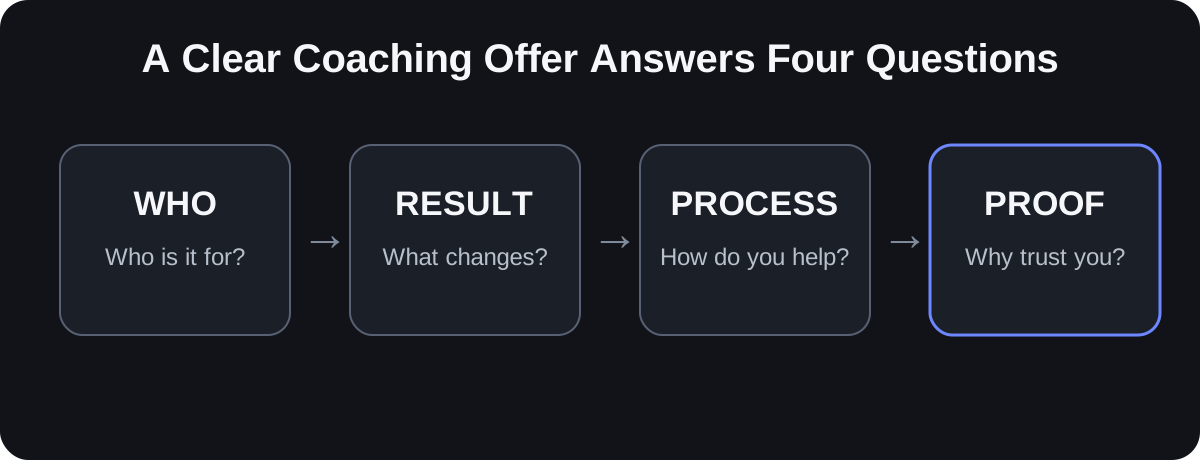
The clearest offers answer four questions quickly: Who is this for? What result does it help them achieve? How does the process work? Why should they trust you?
If one of those answers is missing, the prospect has to fill in the gap. A broad audience weakens relevance. A vague outcome weakens desire. An unexplained process makes the service feel generic. Missing proof makes the promise harder to believe.
- ✓Who: the recognizable person or situation the offer is built for
- ✓Result: the meaningful change the client wants
- ✓Process: the method, structure, and support that create progress
- ✓Proof: evidence that the coach understands the problem and can deliver
Choose an ideal client before choosing the package
The package becomes easier to design when the coach understands the person buying it. A new gym member, a busy executive, a postpartum mother, and an experienced lifter preparing for a competition may all want fitness coaching, but they do not need the same service, communication, or level of support.
The ideal client should be narrow enough that the program can solve a recognizable set of problems. It does not have to exclude everyone else, but it should make the right person feel that the offer was designed with their situation in mind.
- ✓What result are they actively trying to achieve?
- ✓What has stopped them from achieving it already?
- ✓What constraints shape their schedule, training, nutrition, or recovery?
- ✓What kind of support will they actually use?
- ✓What would make the investment feel worthwhile to them?
Define the result without making an irresponsible promise
The result should be specific enough to create interest but honest enough to reflect the uncertainty of coaching. Coaches influence the plan, support, accountability, and decision-making process. They do not control the client's effort, health, schedule, or every external factor.
A useful promise describes the direction and practical value of the program without guaranteeing a result the coach cannot control. The strongest wording often combines a desired outcome with the client's situation or a major obstacle the process is designed to remove.
- ✓Too broad: Get in the best shape of your life
- ✓Clearer: Lose weight and rebuild consistent training around a demanding work schedule
- ✓Too broad: Build muscle with custom coaching
- ✓Clearer: Add strength and muscle with a structured plan that adjusts around travel and limited gym time
- ✓Too broad: Transform your body in 12 weeks
- ✓Clearer: Build the training, nutrition, and accountability habits needed for measurable progress over 12 weeks
Design the process around the obstacles that prevent the result
The delivery should not be a collection of features copied from other coaches. Every major part of the package should help solve a problem that commonly prevents the target client from succeeding.
For a busy professional, the value may come from a realistic training schedule, simple nutrition decisions, travel adjustments, and fast support when the week changes. For a beginner, the package may need more education, form feedback, and confidence-building. For an advanced client, detailed programming and performance analysis may matter more.
- ✓Assessment and goal-setting to establish the starting point
- ✓Training programmed around ability, equipment, and schedule
- ✓Nutrition guidance appropriate to the goal and lifestyle
- ✓Progress tracking that makes improvement visible
- ✓Regular reviews and adjustments when progress stalls
- ✓Communication and accountability at a defined cadence
- ✓Education that helps the client make better decisions independently
Translate features into client value
Prospects rarely buy a feature because the feature exists. They buy what the feature helps them avoid, achieve, understand, or feel.
A workout plan is more valuable when it is presented as a plan built around the client's schedule and limitations. A weekly check-in is valuable because problems are identified before several unproductive weeks pass. Nutrition guidance is valuable because it makes eating for the goal realistic in the client's normal life.
- ✓Custom training plan becomes a clear plan built around the client's schedule and ability
- ✓Weekly check-in becomes early identification of problems before progress stalls
- ✓Nutrition guidance becomes a practical way to eat for the goal without rebuilding the entire household routine
- ✓Messaging support becomes access to guidance when an unexpected decision could derail the week
- ✓Progress tracking becomes visible evidence that the plan is working and clarity about what to change next
Decide how much support the package should include
More access is not automatically a better package. Unlimited communication can sound attractive during the sale and become difficult to deliver as the client roster grows. The goal is to provide enough support to improve outcomes while defining boundaries that protect service quality.
The right support model depends on the client, price, complexity of the result, and coach capacity. Expectations should be specific so the client knows when and how support works.
- ✓Check-in frequency and expected response time
- ✓Whether communication happens through an app, email, DMs, or scheduled calls
- ✓How form reviews are submitted and returned
- ✓How often programs or nutrition targets are adjusted
- ✓What qualifies as urgent support
- ✓What is not included in the coaching relationship
One package or multiple pricing tiers?
A single core package is usually easier to explain, market, sell, and deliver. It works well when the coach serves one clear type of client with a consistent process.
Multiple tiers can make sense when there are genuinely different levels of support. For example, one tier may include app-based coaching and weekly reviews, while another includes more frequent calls, detailed form analysis, or higher-touch accountability. The tiers should solve different service needs, not exist only to make one option look cheaper.
- ✓Use one package when the clients, process, and support needs are similar
- ✓Use tiers when support intensity or access changes meaningfully
- ✓Avoid several nearly identical options that make the decision harder
- ✓Do not remove essential elements from a lower tier if that makes success unlikely
- ✓Make the difference between tiers understandable in one sentence
Choose a commitment length that matches the result
The commitment should give the client enough time to experience meaningful progress and the coach enough time to diagnose, adjust, and build consistency. A very short package may feel lower risk, but it can create unrealistic expectations and frequent reselling.
Monthly coaching offers flexibility but may attract clients who leave before the process has time to work. A three- or six-month commitment can create stronger alignment when the result reasonably requires sustained behavior change. Longer commitments should be supported by a clear roadmap, fair terms, and an experience that continues to provide value.
- ✓Month-to-month: flexible, but easier for clients to quit during early friction
- ✓Three months: enough time for assessment, implementation, and early measurable progress
- ✓Six months: suitable for larger changes that require habit development and multiple adjustments
- ✓Longer terms: appropriate only when the value and progression remain clear throughout
How to price an online fitness coaching package
Price should not be chosen by copying another coach or adding a small margin to the cost of an app. It should reflect the value of the result, the market being served, the support required, the coach's credibility, delivery capacity, acquisition costs, and the economics of the business.
The price also determines how many clients the business must acquire and serve. A lower price can make the decision easier for some prospects, but it creates a higher sales-volume and delivery requirement. A higher price reduces the number of clients needed, but it raises the standard for positioning, proof, sales skill, and service quality.
- ✓The urgency and value of the problem being solved
- ✓The client's ability and willingness to invest
- ✓The amount of individual time and expertise required
- ✓The expected length of the client relationship
- ✓Software, staff, payment processing, and operating costs
- ✓How many clients can be served without lowering quality
- ✓The sales volume required to reach the desired revenue
Pricing determines the sales volume your business must support
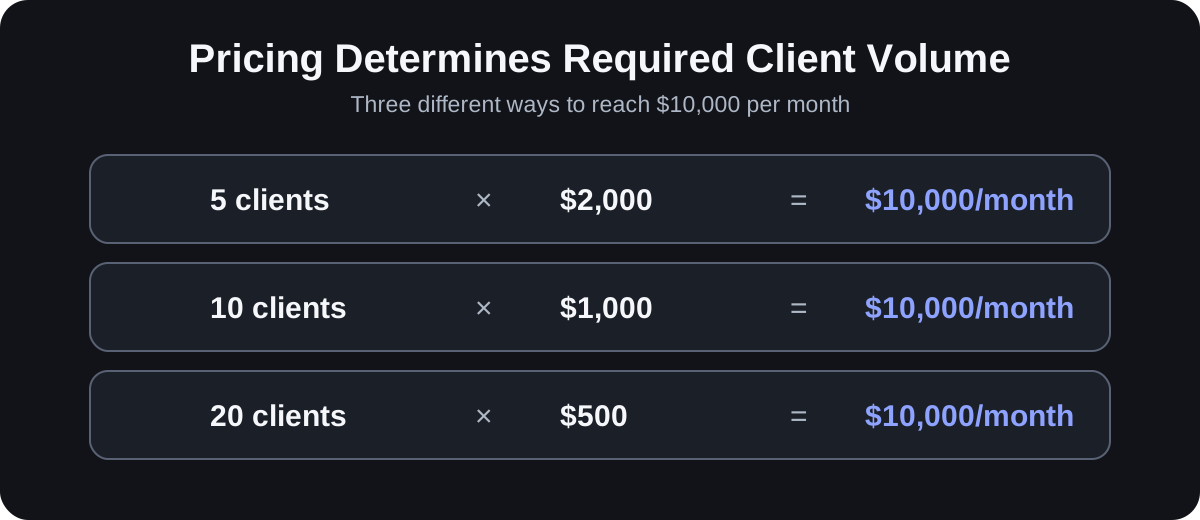
Two coaching businesses can target the same revenue with completely different operating models. At $500 per client, a coach needs 20 active clients to reach $10,000 per month. At $1,000, the business needs 10. At $2,000, it needs five.
This is not an argument that every coach should charge more. The package must justify the price, and revenue is not the same as profit. The point is that pricing changes the number of leads, sales calls, clients, check-ins, and support conversations the business must handle.
Monthly payments versus pay-in-full
Payment structure changes both the buying decision and the cash flow of the business. Monthly payments reduce the immediate amount the client pays, while pay-in-full improves upfront cash collection and reduces future payment risk.
A coach can offer both when the terms remain simple. The pay-in-full option may include a reasonable incentive, but the discount should not make the monthly option feel punitive or undermine the value of the coaching.
- ✓State the total commitment clearly
- ✓Explain the monthly schedule and number of payments
- ✓Use written terms for cancellations, pauses, and missed payments
- ✓Avoid complicated payment combinations that confuse the client
- ✓Measure collected cash rather than relying only on signed contract value
How to communicate the package on Instagram
The entire package does not need to fit in an Instagram bio or one post. The profile should establish who the coach helps, the result or problem they focus on, and the next step. Content can then explain the process, beliefs, proof, objections, and client experience over time.
When a prospect enters the DMs, the goal is not to paste a wall of package details immediately. First understand the person's goal, obstacle, situation, and fit. Then explain the relevant parts of the offer and move qualified prospects toward a call when a conversation is needed.
- ✓Bio: who you help, the primary outcome, and one clear call to action
- ✓Pinned content: your approach, proof, and how coaching works
- ✓Middle-of-funnel content: explain the process and why common approaches fail
- ✓Bottom-of-funnel content: clarify who the offer is for, proof, FAQs, and the next step
- ✓DM conversation: connect the prospect's problem to the relevant value of the package
A complete online fitness coaching package example
Assume a coach works with busy professionals who want to lose 15 to 25 pounds and rebuild strength without spending most evenings in the gym. The package could be positioned around helping that person create a repeatable training and nutrition routine that survives demanding workweeks, travel, and social meals.
The service might include an initial assessment, a three-day strength plan, nutrition targets and meal structure, weekly check-ins, progress tracking, form feedback, travel adjustments, and messaging support with a defined response window. The package could run for three or six months depending on the starting point and result.
Notice that the features are not the central message. They support a clear outcome for a recognizable person with known constraints.
Common online coaching package mistakes
A package should evolve when evidence shows that the market, delivery, or economics need to change. It should not be rebuilt after every sales conversation. Consistency gives the coach enough data to learn what is actually working.
- ✓Trying to serve beginners, athletes, weight-loss clients, and rehabilitation clients with one vague package
- ✓Leading with app access, check-ins, and PDFs instead of the client outcome
- ✓Including unlimited access without the capacity or boundaries to deliver it
- ✓Creating three tiers with differences the prospect cannot understand
- ✓Pricing from fear without calculating the client volume required
- ✓Guaranteeing outcomes the coach cannot fully control
- ✓Changing the package every time one prospect objects
- ✓Discounting before improving positioning, proof, or offer clarity
- ✓Failing to define the commitment, payment terms, and cancellation policy
Online fitness coaching offer checklist
Before publishing or selling the package, review each part of the offer together. The goal is a service that is easy for the right prospect to understand and realistic for the coach to deliver consistently.
- ✓The ideal client is specific and recognizable
- ✓The result or problem is clear without an exaggerated guarantee
- ✓The process directly addresses the client's main obstacles
- ✓Every included feature supports the intended result
- ✓The support level is valuable and operationally sustainable
- ✓The commitment length matches the time needed for progress
- ✓The price supports the desired business model and service quality
- ✓The proof is relevant to the person and promise
- ✓The package can be explained simply in conversation
- ✓The next step is clear
Where Kinetic AI fits
Kinetic AI does not create the coaching package or decide what a coach should charge. It helps protect the conversion process once the offer and content begin generating inbound Instagram interest.
Kinetic AI can respond to new DMs, ask qualification questions, identify whether the prospect fits the offer, send the booking link when a call makes sense, follow up, and track the conversation through to a booked call.
A strong offer gives the right prospect a reason to act. A consistent DM system makes sure that interest does not disappear because of delayed replies, forgotten follow-up, or an unclear booking transition.
Final takeaway
The best online fitness coaching package is not the one with the most features. It is the one that makes the right client, result, process, support, commitment, and price easy to understand.
Start with who the coaching is for and what meaningful change they want. Build the delivery around the obstacles preventing that change. Price the package according to the value, service requirements, and business model needed to deliver it well.
When the offer is clear, marketing becomes more relevant, sales conversations become easier to diagnose, and clients begin with better expectations about what they are buying and how the process works.
Kinetic Growth Partnership
Build a more predictable online fitness coaching business
The Growth Partnership helps online fitness coaches identify the constraint limiting growth, build the missing strategy and systems around it, and review the numbers so the next priority stays clear.