Lead Reactivation for Online Fitness Coaches: How to Win Back Old Leads and Former Clients
Learn how online fitness coaches can reactivate old leads, no-shows, past prospects, and former clients with a simple reactivation system that turns dormant contacts back into conversations and qualified opportunities.
 Written by Dylan StottFounder of Kinetic AI
Most online fitness coaches think growth means finding more new people. More content, more followers, more DMs, more ads, more outreach. But there is usually another audience sitting inside the business already: people who once showed interest and then went quiet.
That group can include old Instagram leads, people who asked about coaching but never booked, consultation no-shows, prospects who said the timing was wrong, former clients, and people who finished a program months ago. They are not all equally valuable, but they are all warmer than a complete stranger because some level of awareness or trust already exists.
Lead reactivation is the process of organizing those dormant contacts, restarting the right conversations, finding out what changed, and giving interested people a clear next step. Done well, it becomes a repeatable acquisition channel instead of an occasional desperate message when the calendar looks empty.
What is lead reactivation for an online fitness coach?
Lead reactivation means reconnecting with someone who already entered your business at some point but is no longer moving forward in the sales or client journey.
The important word is reconnecting. Reactivation is not the same as sending one generic promotion to every old contact. A good reactivation process uses the context you already have. Someone who asked about coaching last week should not receive the same message as a former client who stopped eight months ago.
The goal is to reopen the conversation, understand whether the original problem still matters, and decide what next step makes sense now.
A simple five-part reactivation system
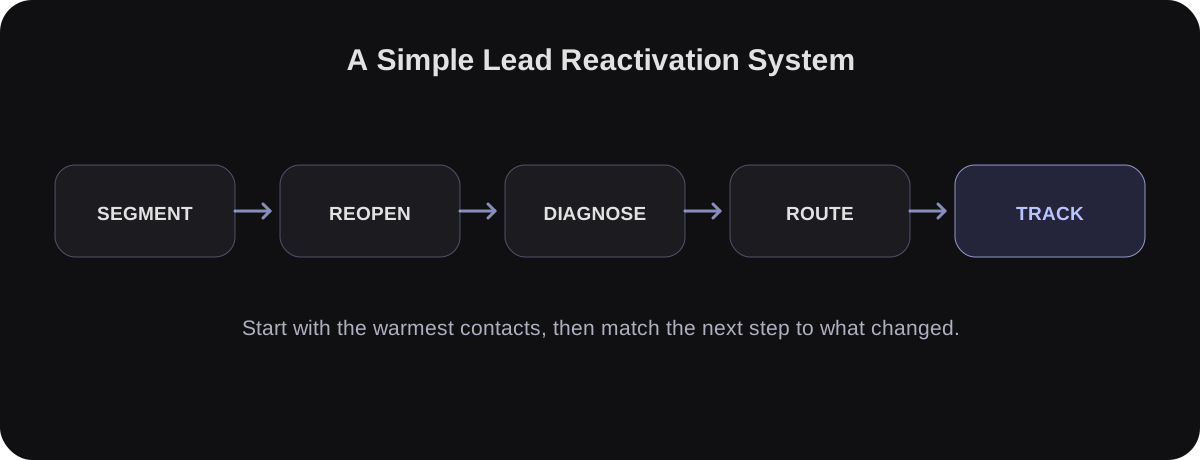
A useful reactivation system can stay simple: segment the database, reopen the conversation, diagnose what changed, route the person to the right next step, and track the result.
That sequence matters because the biggest mistake is jumping from an old contact directly into a sales pitch. You first need to know whether the person is still relevant, still interested, and still a fit.
- ✓1. Segment the dormant contacts
- ✓2. Reopen the conversation naturally
- ✓3. Diagnose what changed
- ✓4. Route the lead to the right next step
- ✓5. Track outcomes and repeat what works
Step 1: separate old contacts by what actually happened
Do not treat your old lead list as one giant group. The last meaningful action usually tells you how warm the person is and what kind of message they should receive.
Start by grouping people based on where the relationship stopped. You do not need perfect CRM data to do this. Even a spreadsheet with a few clear categories is enough to create a much better campaign than one mass message.
- ✓Recent inquiries that stopped replying
- ✓Qualified leads who never booked
- ✓Calls booked but not attended
- ✓Qualified sales calls that did not close
- ✓Prospects who said the timing was wrong
- ✓Former clients who may be ready to restart
- ✓Past clients who completed the original goal and may now have a new one
Prioritize the warmest groups first
If you have a large database, do not start by messaging everyone. Begin with the contacts who had the strongest previous intent and the most recent relationship with you.
A prospect who completed a sales call and said, 'I need to wait until after my work trip,' is usually more actionable than someone who liked a post eighteen months ago. A former client who left on good terms may deserve a more personal message than an old lead who only sent one word in a DM.
Prioritizing by recency, previous intent, and relationship strength helps you spend your time where the context is strongest.
Step 2: reopen the conversation instead of pitching immediately
The first reactivation message should feel like a continuation of an existing relationship, not a cold sales message disguised as a check-in.
Reference the real context when you have it. If the person was waiting for a busy season to end, ask how that period went. If they missed a consultation, mention that you noticed the timing did not work. If they used to coach with you, ask how training has been going since you last worked together.
The first goal is a reply. Once they respond, you can understand the current situation and decide whether there is a real opportunity.
Three simple reactivation messages
You do not need a clever script. The best message usually sounds specific enough that the person remembers why you are reaching out, while leaving room for them to answer honestly.
- ✓Old inquiry: 'Hey [Name], you reached out a while back about getting help with [goal]. Curious how things have been going since then. Did you ever get that figured out?'
- ✓Past sales call: 'Hey [Name], I was looking back through my notes and remembered you were trying to [goal], but the timing was not right when we spoke. Has anything changed since then?'
- ✓Former client: 'Hey [Name], it has been a while since we worked together. How have training and nutrition been going lately? Are you still working toward [goal] or has the focus changed?'
Do not fake personalization
If you do not remember the person well enough to reference a real detail, keep the message simple rather than inventing familiarity.
Fake personalization is easy to spot. A generic automated message that says, 'I was just thinking about you,' can feel less trustworthy than a direct note that says you were reviewing old coaching inquiries and wanted to see whether their goal is still relevant.
Use the context you actually have. Accuracy matters more than pretending the relationship is closer than it is.
Step 3: diagnose what changed before deciding what to sell
A person who responds positively is not automatically ready to buy. Reactivation works best when the new conversation identifies what is different now.
Maybe the original problem disappeared. Maybe they hired another coach. Maybe the goal matters more now. Maybe money was the issue before and is not anymore. Maybe they still want help, but the offer you discussed last time no longer fits their situation.
Ask a few direct questions before sending a booking link. You are trying to understand whether there is still a problem, whether it matters now, and whether your coaching is a reasonable fit.
Related reading
Useful questions after someone replies
The exact question depends on the previous relationship. Keep it conversational rather than turning the reactivation into a form interview.
- ✓What are you working toward now?
- ✓What has changed since we last talked?
- ✓Did you end up finding a solution for the original problem?
- ✓What is still getting in the way?
- ✓Is this something you want to fix now or is the timing still not right?
- ✓Would it be useful to talk through what a plan could look like?
Different dormant leads need different next steps
Reactivation becomes easier when you stop assuming the only successful outcome is a booked call.
Some people are ready for a consultation immediately. Some need more information. Some are interested but still not ready. Some should be removed from active follow-up. Some former clients may only need a short conversation to determine whether a new coaching phase makes sense.
The right next step should match the person's current intent instead of forcing everyone into the calendar.
How to reactivate people who never booked
This group showed some interest but never crossed the line into a real sales conversation. Your job is to find out whether the problem is still active and whether they are more ready now.
Do not start by asking why they ignored your last message. Reopen around the goal they originally mentioned. If they respond and the problem still matters, continue qualification from there.
If they repeatedly avoid answering basic questions or show no real intent, do not chase forever. Reactivation should recover opportunities, not rebuild the same stalled conversation indefinitely.
How to reactivate consultation no-shows
A no-show can mean many things: bad timing, low commitment, a forgotten appointment, an emergency, or weak preparation before the call. Treat the first follow-up as a chance to understand what happened rather than immediately assuming the lead is dead.
If the person still wants help, you can decide whether rescheduling makes sense. If no-shows are common across the whole funnel, however, the problem is larger than reactivation and should be fixed upstream with better qualification, confirmation, and call preparation.
How to reactivate prospects who said 'not now'
These are often some of the highest-value contacts because the objection was timing rather than a complete lack of interest.
When someone gives you a real future constraint, record it. If they say they need to wait until after a move, a vacation, a competition, a financial commitment, or a work deadline, follow up around the time that constraint was supposed to change.
A good reactivation note can simply reconnect to the original timing: 'You mentioned September would be a better time after the move. How did everything go?' That is more natural than sending the same generic follow-up every two weeks.
How to reactivate former clients
Former clients deserve a different approach because they already know what it is like to work with you. Start with the relationship and their current situation, not with a hard pitch.
Ask what has happened since coaching ended. Some people maintained the progress and now have a new goal. Some slowly lost structure and want support again. Others are doing well independently and do not need anything from you.
A former client who is ready to return may not need the exact same package as before. Their new goal, level of independence, and support needs should determine whether a restart, shorter phase, different package, or no offer at all makes sense.
Should you use a discount to reactivate old leads?
A discount can create urgency, but it is not a substitute for understanding why the person stopped moving forward.
If the original problem was timing, trust, unclear value, weak fit, or lack of urgency, lowering the price may not solve anything. It can also train your audience to wait for a promotion instead of making decisions based on the value of the coaching.
Use incentives only when the economics make sense and when the offer gives the person a legitimate reason to act now. A bonus, short restart option, or limited onboarding window may sometimes fit better than simply reducing the price.
A short sequence is usually better than one giant blast
One reactivation message will not reach everyone at the right moment. At the same time, a long automated sequence can quickly become annoying when the person has already moved on.
For most small coaching businesses, a short sequence with a few spaced follow-ups is easier to manage. The first message reopens the conversation, the second follows up simply, and the final message gives the person an easy way to close the loop.
Once someone replies, stop the generic sequence and handle the conversation based on what they actually say.
Example three-touch reactivation sequence
The wording should change by segment, but the structure can stay consistent.
- ✓Touch 1: reference the previous goal or relationship and ask how things are going now.
- ✓Touch 2: follow up briefly a few days later without adding a large sales pitch.
- ✓Touch 3: close the loop politely, make it clear there is no pressure, and leave one simple next step if they want help later.
Know when to stop following up
Reactivation should create useful conversations, not turn old contact information into permission for endless messages.
Honor clear opt-outs. Stop when someone says they are not interested. Remove obviously irrelevant contacts. Respect the rules of the channel you are using and any consent requirements that apply to email, text, or other outreach.
A smaller, cleaner list of people you can contact appropriately is more valuable than a huge database filled with people who should no longer be messaged.
Step 5: track reactivation as its own lead source
If reactivation works, you should be able to see it in the business numbers. Do not let these contacts get mixed into generic 'Instagram' or 'organic' leads where you cannot tell what the campaign produced.
Track enough information to answer three questions: how many dormant contacts did you reach, how many reopened into qualified conversations, and how many eventually became clients or restarted coaching?
- ✓Contacts reached
- ✓Replies
- ✓Qualified conversations
- ✓Calls booked
- ✓Calls attended
- ✓Clients closed or restarted
- ✓Cash collected
- ✓Original dormant segment
- ✓Primary reason the person originally stalled
Use the results to fix the original leak
A reactivation campaign does more than create opportunities. It also shows you why people stopped moving forward in the first place.
If many prospects say they never understood the offer, improve positioning. If many say they were interested but forgot to book, improve the booking process. If no-shows dominate the list, improve pre-call preparation. If former clients repeatedly drifted away because they did not know what came next, strengthen renewal and retention systems.
The best reactivation campaign eventually reduces the number of leads that need to be reactivated because the upstream process becomes stronger.
Common lead-reactivation mistakes
Most reactivation problems come from treating the database like a promotional list instead of a collection of previous conversations and relationships.
- ✓Sending the exact same message to every dormant contact
- ✓Leading with a discount before understanding the reason they stalled
- ✓Pretending to remember details you do not actually have
- ✓Sending a booking link before requalifying the person
- ✓Following up forever after a clear no
- ✓Failing to separate former clients from old prospects
- ✓Not recording why the lead went dormant
- ✓Counting replies as success without tracking calls, clients, and revenue
A practical 30-day reactivation plan
You can build the first version without buying new software. Start with the data you already have and make the process measurable before trying to automate it.
- ✓Week 1: export or review old contacts and create three to five useful segments.
- ✓Week 2: choose the warmest segment and send a small batch of personalized reactivation messages.
- ✓Week 3: review replies, refine the questions and next-step rules, then contact the next segment.
- ✓Week 4: measure qualified conversations, calls, clients, and revenue, then add reactivation to a recurring monthly or quarterly workflow if it is productive.
Where reactivation fits in the broader growth system
Reactivation should support lead generation, not replace it. If the business stops creating new demand, the old database eventually runs out.
A stronger acquisition system combines new demand with better conversion of the demand you already earned. Content and outreach create new leads. Qualification and sales convert active prospects. Retention keeps good clients longer. Referrals create warm introductions. Reactivation gives old opportunities another chance when the timing changes.
Tracking each source separately makes it easier to see which part of the system deserves attention next.
How Kinetic AI fits into lead reactivation
Kinetic AI's Growth Partnership looks at lead reactivation as one possible growth lever inside the full coaching-business system. If old leads are sitting untouched while the coach spends all week trying to create new demand, reactivation may be a useful short-term priority.
The Kinetic AI software can support the Instagram side of the funnel by organizing lead conversations, follow-up, qualification, booking, reminders, and lead status. Reactivation still needs judgment because an old prospect, a no-show, and a former client should not all be treated like the same conversation.
The goal is not to automate every old contact. It is to create a clear process for identifying the right people, restarting the right conversations, and measuring whether the effort produces real opportunities.
Related reading
Final takeaway
Your next client does not always need to come from a new follower or a new lead. Sometimes the opportunity already knows who you are and simply stopped moving forward at the wrong time.
Build a reactivation system around five steps: segment the old contacts, reopen the conversation, diagnose what changed, route the person to the right next step, and track the result. Keep the messages relevant, respect clear boundaries, and use what you learn to improve the rest of the funnel.
That turns a forgotten contact list into a measurable growth channel without making the business dependent on endless new traffic.
Build a more predictable online fitness coaching business
Kinetic AI's Growth Partnership helps online fitness coaches identify what is holding growth back, build the strategy and systems around it, and review the numbers so the next priority is clear.
DM “DOUBLE” on Instagram →