What Is an AI DM Setter? How AI DM Setting Works
Learn what an AI DM setter is, how AI DM setting works, what it can automate, where humans still matter, and how to evaluate an AI setter for inbound sales conversations.
 Written by Dylan StottFounder of Kinetic AI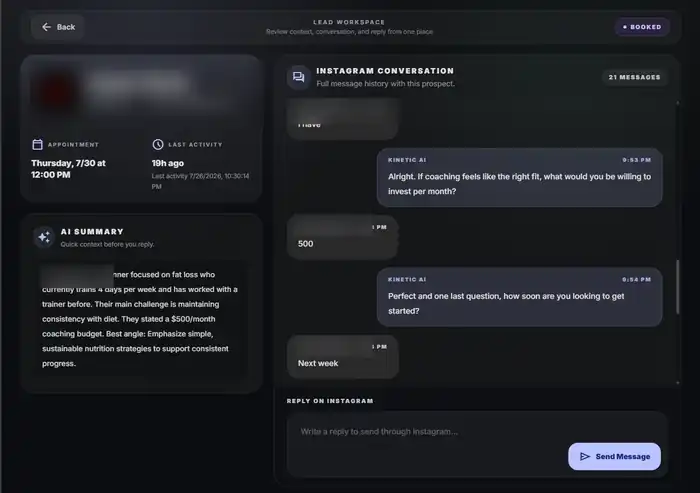
An AI DM setter is software that handles part of the appointment-setting process inside direct messages. Instead of only sending a canned auto-reply, it can interpret what a prospect says, ask relevant questions, gather qualification context, follow up, and move the right person toward a booking or human handoff.
The important word is setter. The goal is not to have an AI chat endlessly. The goal is to move a real sales conversation toward a useful outcome while keeping the experience clear for the prospect.
For a personal trainer, online coach, consultant, or service business, that usually means turning an inbound message into one of a few outcomes: qualified and ready to book, interested but not ready, not a fit, needs a human, or no longer responsive.
What does an AI DM setter actually do?
A useful AI DM setter sits between the moment a prospect starts a direct-message conversation and the moment the business decides what should happen next.
It does not need to replace the entire sales process. In many businesses, the highest-value role is narrower: respond quickly, understand the inquiry, gather the minimum useful context, answer simple questions, follow up when needed, and create a clean next step.
That next step might be a booking link, a human conversation, a request for more information, or a polite disqualification. Good DM setting is not about forcing every lead onto a calendar.
- ✓Respond to a new inbound DM
- ✓Interpret the prospect's goal or reason for reaching out
- ✓Ask one relevant qualification question at a time
- ✓Use previous answers to decide what to ask next
- ✓Answer approved questions about the business or offer
- ✓Follow up when a qualified prospect stops replying
- ✓Send a booking link when the lead reaches the right stage
- ✓Hand the conversation to a human when judgment is required
- ✓Record enough context so the business knows what happened
The AI DM setting process in one flow
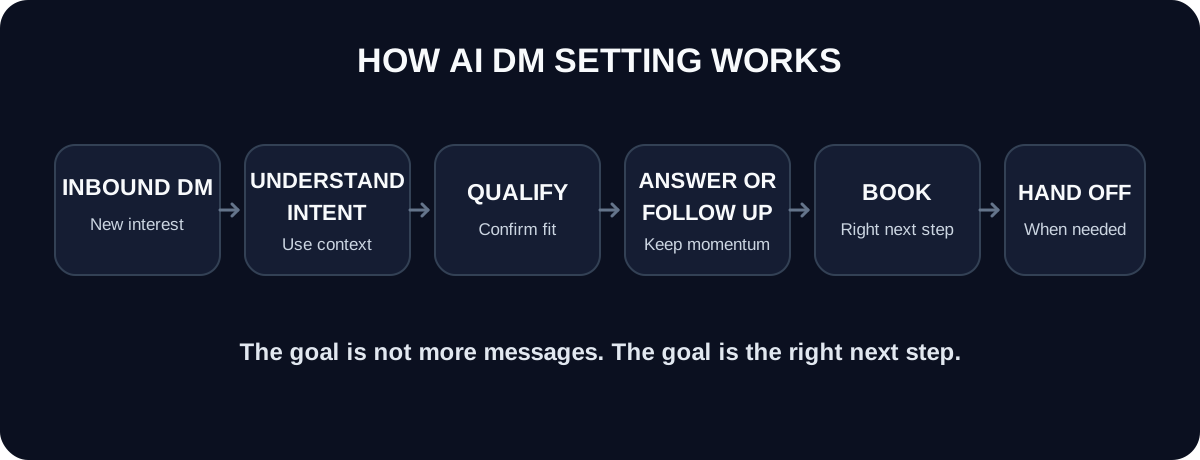
A simple AI DM setting flow is: inbound DM, understand intent, qualify, answer or follow up, then book or hand off.
The exact wording changes from business to business, but the logic should stay simple. Each message should either learn something useful, resolve something important, or move the prospect toward the correct next step.
If the AI is sending messages without changing what the business knows or what the prospect should do next, the conversation is creating activity rather than progress.
AI DM setter vs. a basic auto-reply
A basic auto-reply reacts to a trigger. If someone sends a keyword, comments on a post, or opens a conversation, the system sends a predefined response.
That can be useful for delivering a resource, confirming receipt, or asking the first question. The limitation appears when the prospect says something that does not fit the script.
An AI DM setter is designed to interpret the response and choose what should happen next. The value is not simply that the wording sounds more natural. The value is that the conversation can adapt to context.
- ✓Auto-reply: same trigger usually produces the same predefined message
- ✓Rule-based chatbot: follows branches that were manually designed in advance
- ✓AI DM setter: interprets free-form responses and uses context to decide the next appropriate action
Related reading
Step 1: Recognize why the person reached out
The first job of the setter is to understand what kind of conversation is happening. Not every DM is a sales lead.
A current client asking a support question should not enter the same flow as a new prospect asking about coaching. A person requesting a free resource should not automatically be treated as ready for a sales call. Spam, partnerships, customer service, and genuine sales interest are different situations.
The system should identify intent early enough that the rest of the conversation follows the right path.
- ✓New sales inquiry
- ✓Lead-magnet or keyword request
- ✓Existing-client support
- ✓Pricing or offer question
- ✓Partnership or business inquiry
- ✓Not enough information yet
- ✓Spam or clearly irrelevant message
Step 2: Understand the prospect before trying to book
Good DM setting is a short discovery process. The setter needs enough information to decide whether the offer is relevant and whether a call makes sense.
For an online fitness coach, that might mean understanding the person's goal, what is stopping them, what they have tried, how urgent the problem feels, and whether they are looking for actual coaching rather than a free tip.
The exact questions should come from the business's real sales criteria. An AI setter should not invent a qualification framework that the business itself has never defined.
Step 3: Ask one useful question at a time
A common mistake is turning the DM into a form. Five questions sent at once may collect information faster for the business, but it can make the prospect feel like they have been assigned homework.
A stronger conversational flow asks one useful question, reads the answer, and then decides what matters next. This creates a more natural exchange and allows the setter to skip questions that have already been answered indirectly.
The goal is not to ask the maximum number of questions. It is to reach a confident next-step decision with the minimum amount of friction.
- ✓Start with the reason they reached out
- ✓Clarify the desired outcome
- ✓Understand the main obstacle or current situation
- ✓Ask about timing or urgency when it affects fit
- ✓Confirm practical fit only when necessary
- ✓Stop asking once the next step is clear
Step 4: Use context instead of repeating the script
The difference between a useful AI conversation and a frustrating one often comes down to memory inside the current conversation.
If a prospect already said they want to lose 25 pounds before a wedding, the setter should not later ask, 'What is your main goal?' If they already explained that travel keeps disrupting their routine, the next question should build on that information rather than restart discovery.
Context should also change the tone and direction of the conversation. A person asking a detailed buying question is in a different position from someone who casually requested a checklist five minutes earlier.
Step 5: Answer questions without pretending to be the closer
Prospects rarely move through a perfectly linear qualification script. They ask questions in the middle of the process: how coaching works, whether the service fits a specific situation, what happens on the call, how scheduling works, or what support is included.
An AI DM setter can answer approved factual questions when the business has provided reliable information. It should be more cautious with questions that require judgment, custom promises, negotiation, medical advice, legal advice, or a decision that belongs to the owner or sales team.
A setter helps the prospect reach the next conversation. It does not need to become an all-purpose expert or conduct the entire sales call inside the inbox.
Step 6: Follow up without restarting the conversation
A large part of appointment setting happens after the prospect stops replying. People get distracted, open messages at bad times, need to check their schedule, or intend to respond later and forget.
The useful part of AI follow-up is consistency. The system can remember that the conversation is unfinished and continue from the point where it stopped.
The follow-up should reference the existing context when possible. A generic 'just checking in' message is weaker than a message that reminds the prospect what they were discussing and gives them an easy next action.
Step 7: Send the booking link at the right time
Booking is usually the result of a good setting conversation, not the opening move.
Sending a calendar link immediately can work for a prospect who already knows the offer, understands the purpose of the call, and clearly wants to speak. For colder inbound leads, it can create unnecessary friction because the person has not yet decided that a call is worth their time.
A stronger system earns the booking step. Once the prospect has a relevant problem, appears to fit the offer, and understands why the call is useful, the setter can make the next step clear and easy.
Step 8: Hand off conversations that need a human
Good automation includes a clear escape route. Some conversations should leave the automated flow.
A prospect may ask for a custom arrangement, become upset, disclose a sensitive health issue, challenge a policy, request a negotiation, or ask a question the system cannot answer confidently. Continuing automatically in those moments can create more risk than value.
The handoff should preserve context. The human should be able to see what the prospect wants, what has already been asked, what was answered, and why the conversation was escalated.
- ✓Sensitive or high-stakes questions
- ✓Custom pricing or negotiation
- ✓Complex objections
- ✓Unclear intent after several exchanges
- ✓Angry or frustrated prospects
- ✓Requests to speak with a person
- ✓Anything outside the information the AI has been approved to use
AI DM setter vs. a human DM setter
AI and human setters solve some of the same operational problems, but they do not have identical strengths.
AI is well suited to repetitive, rules-driven parts of the workflow such as immediate responses, basic qualification, consistent follow-up, simple FAQs, routing, and booking logic. A human is stronger when a conversation requires nuanced judgment, relationship building, negotiation, or a decision that was never defined in advance.
For many businesses, the most practical system is not AI or human. It is AI for the repeatable work and a human for exceptions and high-value judgment.
- ✓AI strength: availability and consistency
- ✓AI strength: remembering defined process rules
- ✓AI strength: handling repetitive follow-up without relying on memory
- ✓Human strength: nuanced judgment
- ✓Human strength: unusual situations and negotiation
- ✓Human strength: deeper relationship building when the conversation genuinely needs it
Inbound AI DM setting vs. outbound AI DM setting
The phrase AI DM setter can describe different workflows, so it is important to separate inbound and outbound use cases.
Inbound DM setting begins after the prospect has already created some form of contact, such as sending a message, responding to a story, using a keyword, replying to an advertisement, or starting a conversation from a profile.
Outbound DM setting begins with the business initiating contact. That creates different questions around targeting, platform rules, deliverability, message quality, and whether the recipient actually asked to hear from the business.
Kinetic AI is designed around inbound Instagram lead conversations. Its role begins once interest reaches the inbox, rather than sending cold outbound DMs to strangers.
What information does an AI DM setter need?
An AI setter cannot reliably represent a business if the business has never defined its own rules. Before automating, document what the setter is allowed to know and what decisions it is allowed to make.
Think of this as operational training rather than feeding the AI a giant pile of marketing copy. The system needs concise, current information that changes the conversation.
- ✓Who the offer is for
- ✓Who the offer is not for
- ✓The problems the service can reasonably address
- ✓The main outcomes and service structure
- ✓Qualification criteria
- ✓Common questions and approved factual answers
- ✓When to offer a booking
- ✓When not to offer a booking
- ✓When to follow up
- ✓When to hand off to a human
- ✓What the AI must never promise or decide
What should stay human?
Automation is most useful when it removes repetitive work without removing accountability.
The owner or sales team should still define the offer, qualification standard, pricing policy, booking rules, escalation rules, and what a successful sales conversation looks like. The AI can execute those decisions, but it should not silently rewrite them.
For fitness businesses specifically, coaching decisions, health screening, medical questions, program design, and the actual sales call may require human involvement depending on the situation. An AI setter should not blur the line between setting an appointment and delivering professional advice.
Who benefits most from AI DM setting?
AI DM setting is most useful when direct messages already contain real buying interest and the business has a repeatable next step.
A coach receiving one unrelated DM per month does not have the same problem as a coach who receives inquiries, keyword replies, story responses, and ad conversations every day. Automation becomes more valuable when delayed responses, inconsistent qualification, forgotten follow-up, or poor tracking are already creating operational friction.
- ✓Personal trainers and online fitness coaches generating inbound Instagram inquiries
- ✓Consultants and service businesses that sell through discovery calls
- ✓Businesses using social content to start sales conversations
- ✓Teams that need consistent qualification before calendars are shared
- ✓Owners who repeatedly forget follow-up or lose context between conversations
- ✓Businesses with a clear offer and a defined booking process
When an AI DM setter will not fix the problem
AI DM setting is a conversion tool. It cannot create demand that does not exist, repair an offer nobody wants, or turn every weak-fit inquiry into a customer.
If almost nobody is reaching out, the first problem may be positioning, content, traffic, or the call to action. If qualified people book calls but rarely buy, the problem may be the offer or sales process. If clients leave quickly, acquisition automation will not repair delivery or retention.
The setter should improve a defined part of the customer-acquisition system, not become the explanation for the entire business.
How to measure whether an AI DM setter is working
The most useful metrics follow the prospect through the conversation rather than counting how many messages the AI sent.
Message volume is activity. Business value comes from moving suitable prospects through the right stages with less leakage and less repetitive manual work.
Track enough of the funnel to know whether the AI is improving the process or merely moving the bottleneck somewhere else.
- ✓New inbound lead conversations
- ✓First-response time
- ✓Lead reply rate
- ✓Qualification completion rate
- ✓Qualified-lead rate
- ✓Qualified leads offered the booking step
- ✓Booked appointments
- ✓Show rate
- ✓Human-handoff rate and reasons
- ✓New customers from AI-assisted conversations
Related reading
Common AI DM setting mistakes
Most poor AI setter experiences are not caused by the idea of automation itself. They come from weak process design, missing guardrails, or trying to automate decisions the business has not defined.
- ✓Sending a booking link before understanding the prospect
- ✓Asking too many qualification questions in one message
- ✓Repeating questions the prospect already answered
- ✓Trying to hide the fact that automation is involved when disclosure is appropriate
- ✓Giving the AI outdated or contradictory offer information
- ✓Allowing the system to invent pricing, guarantees, policies, or outcomes
- ✓Following up forever after the prospect clearly says no
- ✓Treating every inbound message as a sales lead
- ✓Failing to create human handoff rules
- ✓Measuring messages sent instead of qualified outcomes
A practical AI DM setter setup checklist
Before turning on an AI setter, map the manual conversation you actually want it to improve. A simple workflow is easier to test than a complicated system with dozens of exceptions.
- ✓Define the inbound triggers that count as possible leads
- ✓Write down the minimum information needed to determine fit
- ✓Choose the qualification questions and their purpose
- ✓Document common questions and approved answers
- ✓Define exactly when a booking link should be offered
- ✓Define exactly when the conversation should be handed to a human
- ✓Create a reasonable follow-up sequence
- ✓Connect the correct calendar or booking destination
- ✓Test normal conversations, edge cases, objections, and irrelevant messages
- ✓Track funnel outcomes after launch and review failed conversations
What AI DM setting looks like for a fitness coach
Imagine a prospect replies to an Instagram story from an online fitness coach and says, 'I need help getting back in shape but my schedule is a mess.'
A basic bot might reply with a generic booking link. A better AI DM setter can acknowledge the situation, ask what result the prospect is trying to achieve, understand why the schedule has been difficult, learn enough to decide whether the coaching offer fits, and then explain the next step.
If the prospect is a fit and wants help, the setter can send the connected booking link. If the prospect asks a complex question about an injury or requests a custom arrangement, the conversation can be handed to the coach with the previous context intact.
That is the useful version of AI DM setting: less repetitive inbox work for the coach, without pretending the AI is the coach, the salesperson, and the decision-maker all at once.
Related reading
Where Kinetic AI fits
Kinetic AI is built for the inbound Instagram setting workflow used by personal trainers and online fitness coaches.
When a prospect starts a relevant Instagram conversation, Kinetic AI can respond, gather qualification context, continue the conversation, send the coach's connected booking link when appropriate, and keep the conversation and booking context together for review.
It does not conduct the coaching sales call, choose the coach's pricing, or decide what offer the business should sell. The coach still owns those decisions. The software handles the repeatable setting work that happens before the call.
Final takeaway
An AI DM setter is not just an auto-reply with better wording. Its job is to understand an inbound conversation well enough to move the prospect toward the correct next step.
The strongest systems are simple: recognize intent, gather useful context, qualify without interrogating, answer approved questions, follow up consistently, offer the booking step when it makes sense, and hand off anything that requires human judgment.
If your business already creates inbound conversations but loses opportunities through slow replies, inconsistent qualification, forgotten follow-up, or poorly timed booking links, AI DM setting can create a more reliable path from interest to a real sales conversation.
Build a more predictable online fitness coaching business
Kinetic AI's Growth Partnership helps online fitness coaches identify what is holding growth back, build the strategy and systems around it, and review the numbers so the next priority is clear.
DM “DOUBLE” on Instagram →