Small Business Lead Response Time: How Fast Should You Respond to New Leads?
Learn how fast a small business should respond to new leads, what the first reply should accomplish, how to handle after-hours inquiries, and how to build a reliable response system.
 Written by Dylan StottFounder of Kinetic AI
When someone contacts a small business, there is usually a short period when the problem is fresh, the buyer is paying attention, and the next step feels easy to take. A slow or confusing response can waste that moment even when the business is a strong fit.
Lead response time is not simply a race to send the fastest possible message. The real goal is to respond while the inquiry still has momentum and make it easier for the prospect to continue. A fast reply that ignores the question, asks the lead to repeat themselves, or sends the wrong next step can be less useful than a slightly slower reply that actually helps.
This guide shows small businesses how to set practical response standards, write stronger first replies, handle missed calls and after-hours inquiries, route leads to the right person, use automation responsibly, and measure whether faster responses are actually creating more sales opportunities.
What is lead response time?
Lead response time is the amount of time between a prospect's inquiry and the business's first meaningful response. The word meaningful matters. An automatic confirmation can be useful, but it is not always the same as a response that answers the question or moves the lead forward.
A small business may receive leads through phone calls, website forms, email, live chat, social media, text, marketplace platforms, referrals, or scheduling requests. Each channel may require a different response process, but the underlying objective is the same: acknowledge the inquiry, understand what the person needs, and create a clear next step.
- ✓Inquiry received: the moment the business has enough information to identify a new opportunity
- ✓Acknowledgement: confirmation that the message or request was received
- ✓Meaningful first response: a reply that uses the inquiry's context and advances the conversation
- ✓First human response: the first reply from a person when human review is required
- ✓Time to next step: how long it takes the lead to reach a meaningful action such as booking, approving, visiting, or providing required information
Why response speed matters
A new inquiry is different from a cold prospect because the person has already taken an action. They called, submitted a form, sent a message, asked for a quote, or requested information. The business does not need to create interest from nothing. It needs to protect the interest that already exists.
As time passes, several things can happen. The person can get distracted, contact another provider, lose urgency, forget which business they contacted, or decide the process looks harder than expected. A reliable response system reduces those avoidable losses.
Speed also affects the customer experience before the sale. A clear, timely response signals that the business is organized and paying attention. That does not guarantee the sale, but it removes one reason for the lead to keep searching.
Do not optimize response time in isolation
The fastest response is not automatically the best response. Small businesses should optimize for response usefulness and speed together.
For example, an instant message that says 'Thanks for contacting us. Someone will reply soon' can reassure the prospect that the form worked, but it may not answer the question. A stronger process might send that acknowledgement immediately and then route the inquiry to the person who can answer it properly.
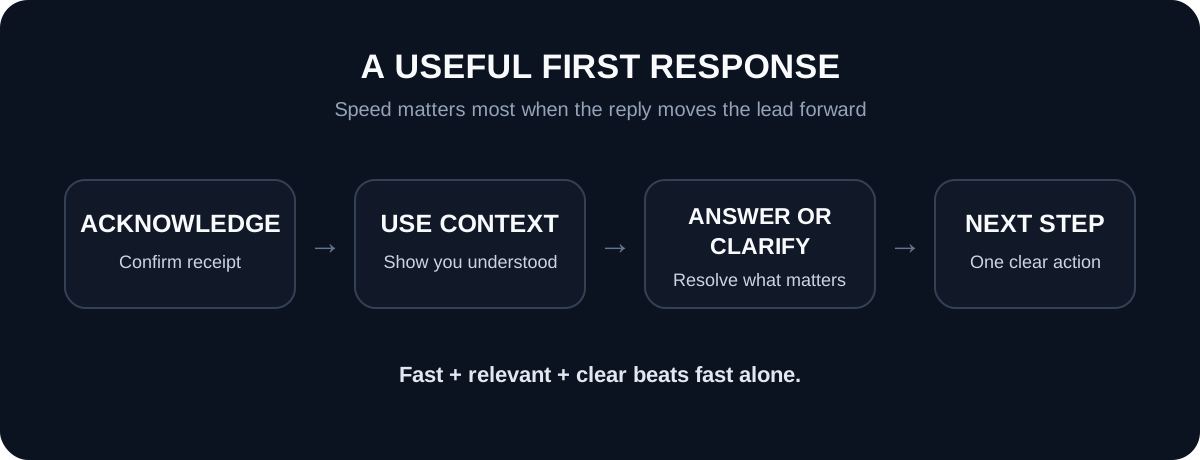
The best first response usually does four things: acknowledges the inquiry, uses the context the lead already provided, answers or clarifies the most important issue, and gives one clear next step.
- ✓Acknowledge: confirm that the inquiry reached the business
- ✓Context: show that the business understood what the person asked about
- ✓Answer or clarify: resolve the obvious question or ask the minimum question needed to continue
- ✓Advance: explain the next action the lead should take
Set response standards by lead type, not one universal number
A single response-time target for every inquiry can create bad priorities. A leaking pipe, a routine quote request, a complex legal inquiry, and a B2B software demo request do not have the same urgency or workflow.
Instead, classify new leads by how time-sensitive the problem is and how much human judgment the next response requires. The standard should reflect the customer's situation, business hours, staffing, and the real buying process.
- ✓Urgent service inquiries: prioritize immediate acknowledgement and fast routing to the person who can act
- ✓Appointment-ready inquiries: respond quickly enough to preserve scheduling momentum and availability
- ✓Quote or estimate requests: confirm receipt, identify missing information, and set a clear expectation for the estimate process
- ✓Complex professional-service inquiries: acknowledge quickly, then allow enough time for a useful reviewed response
- ✓Low-urgency information requests: respond consistently within the window the business has promised
A practical response-time framework for small businesses
Rather than choosing an arbitrary goal, define three separate standards: acknowledgement, meaningful response, and unresolved-lead follow-up. This gives the team a realistic way to handle both simple and complex inquiries.
The exact timing should be set around the business's operating model. A company with a staffed front desk can promise faster human responses than a two-person trade business whose team spends most of the day on job sites.
- ✓Acknowledgement target: how quickly the lead should know the inquiry was received
- ✓Meaningful response target: how quickly the business should answer, qualify, or route the inquiry
- ✓Escalation target: how long an unresolved high-priority lead can sit before someone else is alerted
- ✓Follow-up target: when the business should re-contact a lead who received a response but did not complete the next step
How to handle business-hours inquiries
During normal operating hours, the biggest response delays usually come from unclear ownership. The inquiry reaches a shared inbox, voicemail, social account, or form notification, but nobody knows who is responsible for taking the next action.
Fix this before adding more scripts. Every lead source should have a default owner or routing rule, and every unresolved inquiry should have a visible next action.
- ✓Assign one person or role to each lead source
- ✓Create a backup owner when the primary person is unavailable
- ✓Use alerts only for leads that actually require fast attention
- ✓Record the lead in the same pipeline used for follow-up
- ✓Make the current owner and next action visible
How to handle after-hours inquiries
A small business does not need to pretend a human is available twenty-four hours a day. It does need to remove uncertainty when someone reaches out after hours.
A useful after-hours response should confirm that the message was received, set an accurate expectation for when the next human response will happen, and collect only the information that can safely help route the request. If the business handles emergencies, the message should also explain the correct emergency path.
- ✓State that the inquiry was received
- ✓Give the actual business-hours response expectation
- ✓Do not promise a response time the team cannot consistently meet
- ✓Collect a phone number, location, service needed, or other routing detail only when useful
- ✓Separate emergency instructions from routine inquiries when the business provides emergency service
First-response examples for different small businesses
The first reply should sound like it belongs to the inquiry. Templates are most useful when they preserve the lead's context instead of replacing it with a generic greeting.
- ✓Home service: 'Thanks for reaching out about the water heater. We can help with that. What ZIP code is the property in? Once I have that, I can check the next available appointment.'
- ✓Contractor: 'Thanks for requesting an estimate for the bathroom remodel. I saw that you are hoping to start this fall. Is the project at the planning stage, or do you already have drawings or measurements? That will tell us the right estimate step.'
- ✓Professional service: 'Thanks for the message. I saw that you need help reviewing an agreement before signing. When is the agreement due? I can use that to confirm whether our timeline fits.'
- ✓B2B service: 'Thanks for reaching out. You mentioned that your team is getting enough leads but losing too many before they book. Which part is the biggest issue right now: slow response, qualification, follow-up, or scheduling?'
Common first-response mistakes
Many slow-response problems are really poor-response problems. The business technically replies, but the message creates more work for the lead instead of reducing it.
Review the actual first replies your business sends. If the lead has to repeat information, choose between several actions, or wait for another person to understand the context, the process has friction even when the timer looks good.
- ✓Asking 'How can I help?' after the form already explains the problem
- ✓Sending several links before understanding what the lead needs
- ✓Giving the lead multiple next steps in one message
- ✓Responding with a long qualification form before answering a simple question
- ✓Moving the conversation to another channel without explaining why
- ✓Sending an acknowledgement that sounds like a full answer when no one has actually reviewed the inquiry
- ✓Failing to tell the lead when a human response will arrive
Automatic acknowledgement versus a real first response
Automation can shorten the gap between inquiry and acknowledgement, but businesses should distinguish between confirming receipt and resolving the inquiry.
An automated acknowledgement is valuable when it sets expectations, captures missing routing details, or offers a simple next step that is safe to automate. It becomes a problem when it gives the impression that the issue was handled even though the lead is still waiting for a meaningful response.
- ✓Good use: confirm the message was received
- ✓Good use: explain business hours and expected response timing
- ✓Good use: ask one stable routing or qualification question
- ✓Good use: send a scheduling link after the lead has reached the correct booking step
- ✓Poor use: claim the business can solve a problem before enough context exists
- ✓Poor use: send generic marketing material instead of addressing the inquiry
- ✓Poor use: hide the fact that human review is still required
Build a missed-call response process
Missed calls deserve their own workflow because the business may have very little context. If the caller leaves no voicemail, the phone number may be the only information available.
Where customer consent and applicable communication rules allow it, a missed-call text can identify the business, acknowledge the call, and ask what the person needs. The lead should also be recorded in the same system as forms, messages, and other inquiries so it does not disappear if they do not call again.
- ✓Record the missed call as a new lead or unresolved contact
- ✓Send an acknowledgement when appropriate for the channel and consent
- ✓Ask for the minimum information needed to understand the request
- ✓Assign an owner for the return call
- ✓Create a follow-up task if the caller does not respond
Improve website form response time at the source
Website forms often create hidden delays because the submission goes to an inbox that is not monitored consistently. The form works, but the operational handoff does not.
Map exactly what happens after someone clicks submit. The form should create a record, alert the right owner, confirm receipt to the prospect, and make the next action obvious internally.
- ✓Send the lead to a shared system rather than one person's inbox when possible
- ✓Capture the source and page that generated the inquiry
- ✓Ask only for information that will change the next step
- ✓Trigger an accurate confirmation message
- ✓Create an internal owner and response deadline
- ✓Test the form regularly from submission through final notification
Social media and messaging inquiries need the same discipline
Social DMs can feel informal, which makes them easy to manage casually. But a serious inquiry in a DM is still a lead and should have the same ownership, qualification, follow-up, and next-step rules as a form or phone call.
The advantage of messaging is that the conversation can often continue in the channel the prospect already chose. The risk is that important opportunities stay buried in an inbox without a clear status or follow-up process.
- ✓Identify which messages count as real inquiries
- ✓Respond using the context of the message or content that triggered the conversation
- ✓Move qualified opportunities into the lead record or pipeline
- ✓Do not force every DM to a call before basic fit is understood
- ✓Track whether the lead actually completed the booking or next step
Use lead qualification to make responses faster, not longer
Qualification should reduce wasted time for the business and the prospect. It should not turn the first response into an interrogation.
Ask the smallest number of questions required to choose the correct next step. A local service business may need location and service type. A consultant may need the current problem and urgency. A larger B2B sale may require more context, but that information can often be collected over several steps instead of all at once.
Create a clean handoff when the first responder cannot finish the conversation
Fast front-line response loses its value when the lead then waits hours or days for the specialist, estimator, owner, salesperson, or technician who actually needs to continue the conversation.
A good handoff transfers the context, states who owns the lead next, and gives the prospect an accurate expectation. The second person should not need to restart the conversation from the beginning.
- ✓Record what the lead asked for
- ✓Record the information already collected
- ✓Assign the next owner before ending the first interaction
- ✓Tell the prospect who will contact them and what happens next
- ✓Set an internal deadline for the handoff
- ✓Escalate the lead if the deadline passes without action
Track response time correctly
Response-time reporting becomes misleading when the business mixes acknowledgement time, human response time, and time to actual next step into one number. Track them separately when the distinction matters.
Median response time is often more useful operationally than an average because a few extremely slow or fast cases can distort the average. More important, segment the metric by channel, business hours, lead type, and owner so you can see where delays actually occur.
- ✓Time to acknowledgement
- ✓Time to meaningful first response
- ✓Time to first human response when required
- ✓Time from inquiry to qualification
- ✓Time from inquiry to booked appointment, estimate, or consultation
- ✓Percentage of leads that receive a response inside the business's target window
- ✓Response time by channel, lead source, owner, and business-hours status
Measure the result, not just the timer
A faster response process is only useful if it improves the customer journey or makes the sales process more reliable. Pair response-time metrics with downstream conversion metrics.
If response time improves but reply rates, qualification rates, or bookings fall, the team may be sending faster but weaker messages. If response time improves and more qualified leads reach the next step, the operational change is likely helping.
- ✓Lead reply rate after the first response
- ✓Inquiry-to-qualified conversion rate
- ✓Inquiry-to-appointment or estimate rate
- ✓Appointment show rate
- ✓Qualified-lead-to-customer conversion rate
- ✓Lost reasons tied to no response, slow response, or unreachable lead
How to find the reason your responses are slow
Do not assume the team simply needs to work faster. Slow response is usually caused by a process constraint that can be identified and fixed.
Review a sample of recent leads and trace the exact path from inquiry to first meaningful response. Look for the point where the lead waited with no owner, no notification, no information, or no next action.
- ✓Lead source problem: inquiries arrive in too many separate places
- ✓Notification problem: the right person does not know a lead arrived
- ✓Ownership problem: several people can respond, so nobody clearly owns it
- ✓Information problem: the first responder lacks the details needed to help
- ✓Routing problem: the inquiry reaches the wrong person first
- ✓Capacity problem: the assigned person has more leads than they can handle
- ✓Handoff problem: the first response is quick but the second step stalls
- ✓Tracking problem: the business cannot see which leads are still waiting
A seven-day plan to improve lead response time
Small businesses can improve response time without replacing every tool at once. Start by making the current workflow visible, then remove the biggest delay before adding more automation.
- ✓Day 1: list every place new leads currently arrive
- ✓Day 2: measure a sample of recent acknowledgement and meaningful-response times
- ✓Day 3: assign one primary owner and one backup owner to each lead source
- ✓Day 4: write a useful first-response template for the most common inquiry types
- ✓Day 5: define business-hours, after-hours, and urgent-inquiry response standards
- ✓Day 6: add alerts, routing, or acknowledgement automation where it removes a real delay
- ✓Day 7: begin tracking response time alongside qualification, booking, and sales outcomes
Where Kinetic AI fits
Kinetic AI addresses one specific version of the lead-response problem: inbound Instagram conversations for personal trainers and online fitness coaches.
When a new Instagram lead starts a conversation, Kinetic AI can respond, qualify the prospect, follow up, and send the connected booking link when the conversation reaches the right point. It also tracks whether the lead actually schedules a call so the coach has more visibility than a simple instant auto-reply provides.
The broader principle is the same for any small business: automation is most valuable when it removes delay from a clear process. It should not replace the judgment needed for custom pricing, unusual requests, sensitive situations, or sales conversations that require a person.
Final takeaway
Small business lead response time matters because new inquiries already contain momentum. The goal is to protect that momentum, not win a race to send the first generic message.
Set realistic response standards by lead type, acknowledge inquiries quickly, preserve the context the prospect already gave you, answer or clarify what matters, assign a clear owner, and move the lead toward one next step. Then measure whether faster responses are producing more qualified conversations, appointments, estimates, proposals, and customers.
When response speed and response quality improve together, the business can convert more of the demand it is already generating before spending more to create additional leads.
Build a more predictable online fitness coaching business
Kinetic AI's Growth Partnership helps online fitness coaches identify what is holding growth back, build the strategy and systems around it, and review the numbers so the next priority is clear.
DM “DOUBLE” on Instagram →