Small Business Lead Follow-Up: How to Turn More Inquiries Into Customers
A practical lead follow-up system for small businesses covering response time, qualification, message templates, follow-up cadence, channels, automation, and conversion tracking.
 Written by Dylan StottFounder of Kinetic AI
Most small businesses do not lose every lead because the offer is bad or the prospect was never serious. A large number of opportunities simply disappear between the first inquiry and the next clear step.
Someone fills out a form, sends a message, requests a quote, calls after hours, or asks a question. The business replies late, answers only part of the question, forgets to follow up, sends the wrong link, or never records what happened. The prospect then moves on, gets distracted, or chooses the business that made the process easier.
A good lead follow-up system fixes that operational gap. It makes sure every inquiry receives a timely response, the business understands what the person needs, qualified leads are moved toward the right next step, and unanswered opportunities are followed up without relying on memory.
What is small business lead follow-up?
Lead follow-up is the process that begins after a potential customer expresses interest but before the sale is complete. It includes the first response, qualification, answering questions, scheduling, reminders, quote follow-up, missed-call recovery, and re-engagement when the lead stops replying.
The exact process depends on the business. A plumber may need to confirm location and urgency before dispatching a technician. A law firm may need to understand the matter before scheduling a consultation. A contractor may need to book an estimate. A consultant may need to qualify the problem, budget, and timeline before a sales call.
- ✓Capture every new inquiry in one place
- ✓Respond quickly enough that the lead still remembers the context
- ✓Ask the minimum questions needed to understand fit and urgency
- ✓Give one clear next step
- ✓Follow up when the lead does not respond
- ✓Track the outcome so opportunities do not disappear
Why small business leads go cold
A lead going silent does not always mean they changed their mind. People inquire while working, commuting, comparing options, talking with a spouse, solving another problem, or trying to understand a purchase they do not make often.
This is why a single unanswered message is weak evidence of lost intent. A reliable system treats silence as a reason to follow up, not as proof that the prospect is no longer interested.
- ✓The business took too long to respond
- ✓The response did not answer the real question
- ✓The prospect did not understand the next step
- ✓The lead was asked to do too much too early
- ✓The conversation moved across several channels and context was lost
- ✓The prospect became busy or distracted
- ✓The business never followed up after sending a quote or booking link
- ✓The lead was not actually a good fit and should have been disqualified earlier
Build the follow-up process around five stages
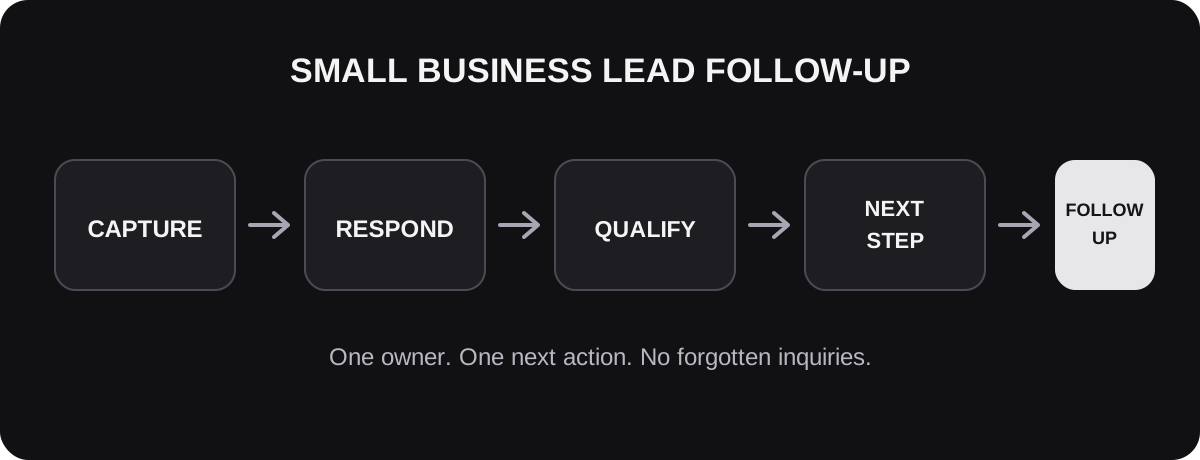
A simple lead workflow is easier to manage than a collection of disconnected scripts. Every new inquiry should move through five stages: capture, response, qualification, next step, and follow-up.
The system does not need to be complicated. It needs to make the current status of every lead obvious and tell the team what action should happen next.
- ✓Capture: record the inquiry, source, contact information, and time received
- ✓Response: acknowledge the request and continue the conversation
- ✓Qualification: understand the need, fit, urgency, and relevant constraints
- ✓Next step: give the lead one clear action such as booking, approving, visiting, or providing information
- ✓Follow-up: continue the conversation when the next step has not happened
Respond fast, but do not sacrifice usefulness
Fast responses matter because the prospect's attention is already on the problem when they inquire. But speed alone does not create a good experience. A fast message that says only 'How can I help?' after the lead already explained the problem creates more work for them.
The first reply should show that the inquiry was understood, answer the obvious question when possible, and move the conversation forward with one useful next step.
- ✓Acknowledge the specific request rather than sending a generic greeting
- ✓Confirm important details already provided so the lead does not repeat themselves
- ✓Answer simple questions immediately when the answer is known
- ✓Ask one or two high-value questions instead of sending a long questionnaire
- ✓Set expectations when a full answer requires a human or additional review
What the first response should accomplish
The first response does not need to close the sale. It needs to reduce uncertainty and create momentum.
For many service businesses, the ideal first response confirms the request, shows basic relevance, asks one useful question, and explains what will happen after the answer.
- ✓Confirm: show the lead that the inquiry was received
- ✓Context: reference what they actually asked about
- ✓Clarify: ask the single most important question needed to move forward
- ✓Advance: explain the next step after they reply
First-response message examples
Templates should create consistency, not make every conversation sound identical. Use the structure below, then adapt the details to the business and the lead's request.
- ✓Local service: 'Thanks for reaching out about the leaking water heater. We can help with that. What ZIP code is the property in? Once I have that, I can check the next available appointment.'
- ✓Professional service: 'Thanks for the message. It sounds like you need help reviewing the contract before signing. Is the agreement already finalized, or are you still negotiating the terms? That will tell us the right next step.'
- ✓Consulting: 'Thanks for reaching out. You mentioned that lead volume is healthy but conversions are low. Roughly where are most prospects dropping off right now: before the call, during the sales process, or after the proposal?'
- ✓Home improvement: 'Thanks for requesting an estimate. I saw that the project is for a kitchen remodel. Is there a target start date you are working toward? After that, I can explain our estimate process and availability.'
Qualify without turning the conversation into an interrogation
Qualification protects both sides. It prevents the business from spending time on jobs it cannot serve and prevents the customer from moving through a process that was never a fit.
The mistake is asking every possible question before giving any value. Start with the questions that determine whether the lead can be helped and what next step makes sense. More detailed information can be collected later.
- ✓Need: what problem are they trying to solve?
- ✓Fit: does the business actually provide the right service?
- ✓Location: is the lead inside the service area when geography matters?
- ✓Timing: how soon does the person need the problem solved?
- ✓Scope: is the request large, small, routine, or unusually complex?
- ✓Decision process: who needs to be involved before the next step?
- ✓Budget: only ask when it materially affects fit or the recommended solution
Choose the next step based on the type of sale
Not every lead needs a sales call. The next step should match the complexity, risk, and information required to complete the purchase.
A simple transaction may move directly to checkout or scheduling. A complex service may need a consultation, estimate, site visit, demonstration, or proposal. Forcing every lead through the same step adds friction.
- ✓Book an appointment when service can be scheduled directly
- ✓Schedule a call when the problem requires diagnosis or explanation
- ✓Book an estimate or site visit when scope must be inspected
- ✓Send a quote when enough information already exists
- ✓Request documents or photos when they are needed before pricing or scheduling
- ✓Disqualify politely when the request falls outside the business's scope
Use one clear call to action at a time
Follow-up becomes harder when the lead receives several possible actions in one message. 'Call us, fill out this form, book here, or reply if you have questions' looks flexible but creates decision friction.
Choose the one action that most directly advances the sale. If the lead does not take it, the next follow-up can offer a different path when appropriate.
- ✓Choose a time for the estimate
- ✓Reply with the property address
- ✓Send the requested photos
- ✓Approve the proposal
- ✓Book the consultation
- ✓Confirm that you would like us to reserve the appointment
A practical follow-up cadence for unanswered leads
There is no universal follow-up schedule that fits every industry. Urgency, purchase size, sales cycle, communication channel, and customer expectations all change the right timing.
The example below is a starting point for service businesses with non-emergency inquiries. Adjust the spacing based on how quickly customers normally make decisions and how time-sensitive the request is.
- ✓Initial response: reply as soon as the business can provide a useful answer
- ✓Follow-up 1: later the same day or the next business day when the next step is still incomplete
- ✓Follow-up 2: two to three days later with a useful reminder or clarification
- ✓Follow-up 3: about a week later with a low-pressure question about whether the need still exists
- ✓Follow-up 4: a final close-the-loop message when continued short-term follow-up no longer makes sense
- ✓Long-term reactivation: revisit appropriate leads later when the purchase cycle is naturally longer
Follow-up messages should add context, not just ask 'Any update?'
Repeatedly asking whether the prospect saw the last message creates little value. Each follow-up should make the next decision easier.
That may mean restating the open question, clarifying availability, answering an expected concern, reminding the person what happens next, or making it easy to say that the need has changed.
- ✓Reminder: 'Just following up on the estimate request. I only need the property address to confirm whether we service the area.'
- ✓Useful context: 'One thing that may help before we schedule: most projects like this start with a 30-minute site visit so we can price the scope accurately.'
- ✓Availability: 'We still have Thursday afternoon open if you would like me to reserve it.'
- ✓Low-pressure check: 'Is this still something you want help with, or has the timing changed?'
- ✓Close the loop: 'I do not want to keep filling your inbox, so I will close this out for now. If the project becomes active again, reply here and we can pick it back up.'
How to follow up after sending a quote or proposal
Quote follow-up is different from first-contact follow-up because the prospect has already received a specific recommendation or price. The goal is to identify what is preventing a decision, not repeatedly ask whether they are ready to buy.
A strong quote follow-up makes it safe for the lead to surface the real issue. They may need clarification, a different timeline, another decision-maker, a revised scope, or simply more time.
- ✓Confirm that the quote was received and is understandable
- ✓Ask whether any part of the scope or pricing needs clarification
- ✓Restate deadlines only when availability or pricing genuinely changes
- ✓Ask what is preventing the next step when the prospect appears interested but inactive
- ✓Do not create fake urgency or pretend availability is limited when it is not
How to recover missed calls and after-hours inquiries
Missed calls are easy to lose because the business often has no conversation history beyond a phone number. Create a process that turns the missed call into a trackable lead instead of hoping the person calls again.
A short text or message can acknowledge the call, identify the business, ask what the person needs, and tell them when a human response will be available.
- ✓Send an acknowledgement when the channel and customer consent allow it
- ✓Ask for the minimum information needed to route the request
- ✓Record the missed call in the same lead system as forms and messages
- ✓Assign ownership so one person is responsible for the next response
- ✓Set an internal deadline for unresolved missed-call leads
When to call, text, email, or message the lead
The best channel depends on where the inquiry started, what the customer expects, and how much explanation the next step requires.
As a default, continue in the channel the person already chose unless there is a clear reason to move. When switching channels, explain why and preserve the context so the lead does not feel like they are starting again.
- ✓Phone: useful for complex, urgent, or high-value conversations that benefit from real-time discussion
- ✓Text: useful for short confirmations, scheduling, reminders, and simple questions when permission and local rules allow it
- ✓Email: useful for detailed explanations, documents, quotes, and information the customer may need to review later
- ✓Social or website messaging: useful when the inquiry began there and the conversation can be resolved without forcing an unnecessary channel change
Keep one lead record even when conversations happen in several places
Small businesses often lose follow-up visibility because leads exist separately in inboxes, phones, spreadsheets, social DMs, contact forms, and scheduling tools.
The solution is not necessarily expensive software. It is a single source of truth that shows who the lead is, what they need, where the conversation stands, and what should happen next.
- ✓Name and contact information
- ✓Lead source
- ✓Date and time of first inquiry
- ✓Service or product requested
- ✓Qualification notes
- ✓Current stage
- ✓Last contact date
- ✓Next action and owner
- ✓Booked appointment, quote, or proposal status
- ✓Final outcome and reason lost when known
What to automate and what should stay human
Automation is most useful when it prevents important steps from being forgotten. It should remove repetitive administrative work without pretending every customer situation is identical.
Use automation for predictable events. Keep judgment-heavy conversations under human control, especially when pricing, safety, scope, legal issues, sensitive information, or unusual customer circumstances are involved.
- ✓Good automation: inquiry acknowledgement, routing, reminders, scheduling links, appointment confirmations, status updates, and follow-up task creation
- ✓Good automation: basic qualification when the questions are stable and easy to interpret
- ✓Human review: unusual requests, complex objections, custom pricing, escalations, complaints, and sensitive situations
- ✓Human review: any conversation where an automated answer could create meaningful financial, legal, safety, or trust problems
Lead follow-up metrics every small business should track
You do not need a large analytics system to improve follow-up. A few stage-level numbers can reveal whether the real problem is lead quality, response, qualification, scheduling, or sales conversion.
Track the same definitions consistently before trying to optimize small changes. If every employee counts a lead or booking differently, the numbers become difficult to use.
- ✓New inquiries received
- ✓Percentage receiving a response
- ✓Median or typical first-response time
- ✓Percentage that reply after the first response
- ✓Qualified leads
- ✓Appointments, estimates, or consultations booked
- ✓Quotes or proposals sent
- ✓Customers won
- ✓Leads lost or disqualified
- ✓Reason lost when the reason is known
Diagnose the bottleneck before adding more leads
More advertising does not automatically solve a follow-up problem. If the business already receives inquiries that go unanswered, adding more lead volume can increase waste rather than sales.
Use the funnel to identify the first major drop-off. If inquiries are high but responses are low, fix coverage and routing. If responses are high but conversations do not continue, improve the first reply and qualification. If qualified leads do not book, simplify the next step. If appointments happen but sales stay low, the issue may sit inside pricing, the offer, or the sales process rather than follow-up.
Common small business lead follow-up mistakes
Most follow-up systems fail because responsibility is unclear or the process creates unnecessary friction for the customer.
- ✓Relying on memory instead of assigning a next action
- ✓Treating every inquiry as equally qualified
- ✓Taking too long to send the first useful response
- ✓Asking the lead to repeat information they already provided
- ✓Sending several links and next steps in one message
- ✓Following up only once
- ✓Sending the same 'checking in' message repeatedly
- ✓Moving channels without explaining why
- ✓Losing context between team members
- ✓Automating complex answers that require human judgment
- ✓Continuing to chase clearly unqualified leads
- ✓Buying more leads before measuring what happens to the leads already coming in
A seven-day lead follow-up implementation plan
A small business can improve follow-up without rebuilding its entire sales system at once. Start by making lead ownership and next actions visible, then add automation only after the basic workflow works manually.
- ✓Day 1: list every place new inquiries currently arrive
- ✓Day 2: create one shared lead record and define the required fields
- ✓Day 3: write one strong first-response template for each major inquiry type
- ✓Day 4: define the minimum qualification questions and the correct next step for each service
- ✓Day 5: create a simple unanswered-lead follow-up cadence
- ✓Day 6: assign ownership, response expectations, and escalation rules
- ✓Day 7: begin tracking inquiry, response, qualification, booking, and sale outcomes
Where Kinetic AI fits
Kinetic AI is built around one specific version of this problem: inbound Instagram conversations that need to be answered, qualified, followed up, and moved toward a booked call.
For businesses using Instagram as a lead channel, the same principles in this guide apply. The system can respond to new DMs, ask qualification questions, send a booking link when appropriate, follow up, track whether a call was actually scheduled, and preserve context for the sales conversation.
Automation does not fix a weak offer or poor service. Its value is making sure qualified interest does not disappear because the response was delayed, follow-up was forgotten, or nobody knew the lead's current status.
Final takeaway
Small business lead follow-up is not about sending more reminders. It is about making the buying process easier to continue.
Capture every inquiry, respond with useful context, qualify only what matters, give one clear next step, follow up when that step does not happen, and track the outcome. Once that process is reliable, automation can help the business execute it consistently at higher volume.
Before spending more money to generate additional leads, make sure the leads already reaching the business have a clear path to becoming customers.
Kinetic Growth Partnership
Build a more predictable online fitness coaching business
The Growth Partnership helps online fitness coaches identify the constraint limiting growth, build the missing strategy and systems around it, and review the numbers so the next priority stays clear.