Online Fitness Coaching Sales Calls: How to Structure the Conversation
Learn how to structure an online fitness coaching sales call from opening and diagnosis through presenting the offer, handling concerns, and making a clear decision without turning the conversation into a pressure-heavy pitch.
 Written by Dylan StottFounder of Kinetic AI
An online fitness coaching sales call should not feel like a memorized pitch. It should feel like a structured conversation that helps both people decide whether working together makes sense.
The coach needs to understand the prospect's goal, current situation, previous attempts, real constraints, and urgency before recommending anything. The prospect needs to understand what is actually stopping progress, how the coaching would address it, what the commitment involves, and whether the offer is worth acting on now.
A good structure makes that conversation more consistent without making it robotic. You know what information you need, what order makes sense, and when you have enough context to move from diagnosis to recommendation.
What is the goal of an online fitness coaching sales call?
The goal is not simply to close every person who gets on the calendar. The goal is to reach a clear, informed decision with the right prospects.
That requires two decisions. First, you decide whether the prospect has a problem you can realistically help solve and whether they are a fit for your coaching. Second, the prospect decides whether your process, expectations, price, and timing make sense for them.
If you focus only on closing, you can end up pushing poor-fit clients into the program, creating refunds, weak adherence, bad client experiences, and unnecessary churn. If you focus only on giving free advice, the call turns into a coaching session with no clear decision. The sales call needs both diagnosis and direction.
A simple seven-part sales call structure
You do not need a fifty-question script. A useful structure can be built around seven parts: open and frame the call, establish the goal, understand the current reality, uncover the gap, diagnose the main problem, present the path, and make a clear decision.
The exact wording should change with the person. The order is what creates consistency.
- ✓1. Open and frame the conversation
- ✓2. Establish the prospect's goal
- ✓3. Understand the current situation
- ✓4. Explore the gap and previous attempts
- ✓5. Diagnose the real bottleneck
- ✓6. Present the coaching path and offer
- ✓7. Address concerns and reach a decision
Before the call: use the information you already have
The sales call should not begin from zero if the prospect already filled out a form, exchanged direct messages, or answered qualification questions before booking.
Review the context before the call. Know the basic goal, the reason they reached out, anything important they already shared, and whether the lead was qualified for the conversation. Repeating every pre-call question wastes time and makes the process feel disconnected.
Use the existing information to go deeper. If the prospect already said they want to lose twenty pounds, the live conversation should explore why that matters, what has prevented it, what they have tried, and what would need to change for the result to become realistic.
Related reading
Step 1: Open and frame the conversation
Keep the opening short. Build enough rapport that the conversation feels human, then explain what the call is for.
A useful frame tells the prospect that you want to understand where they are, where they want to go, what appears to be getting in the way, and whether your coaching is a sensible fit. It also makes it clear that if you do not believe you can help, you will say so.
This lowers uncertainty for both sides. The prospect knows they will not be trapped in a surprise pitch, and you have permission to ask direct questions because the purpose of the call is clear.
- ✓Keep small talk brief and natural.
- ✓Explain the purpose of the conversation.
- ✓Set the expectation that you will ask questions before discussing the offer.
- ✓Make fit a two-way decision rather than assuming every call should become a sale.
Step 2: Establish the outcome they actually want
Start with the destination before diving into problems. The prospect should be able to explain what they want to change and what success would look like in practical terms.
Do not stop at a surface goal such as losing weight, building muscle, or becoming more consistent. Ask enough to understand the desired result, the timeframe, and why the result matters now.
The emotional meaning matters because fitness goals usually compete with work, family, money, travel, stress, and old habits. If the goal is not important enough to change behavior, the prospect may not be ready for coaching even if they like the idea of the outcome.
- ✓What would you most like to change over the next six months?
- ✓What would a successful result look like for you?
- ✓Why is that important now rather than six months from now?
- ✓If you achieved that, what would be different in your day-to-day life?
- ✓Is there a particular event, deadline, or situation affecting the timing?
Step 3: Understand the current reality
Once the destination is clear, understand the starting point. The gap between those two points is what the rest of the call is trying to explain.
Ask about the prospect's current training, nutrition, consistency, schedule, previous coaching, injuries or relevant limitations, and the parts of the process they already handle well. You are trying to build an accurate picture, not search for reasons to make the problem sound worse than it is.
A good sales conversation should sometimes reveal that the person does not need your offer. If someone already has a plan that works and simply needs patience, saying so can be more valuable than manufacturing a problem to sell against.
- ✓What are you currently doing for training and nutrition?
- ✓How consistent has that been over the last few months?
- ✓What tends to happen when things go off track?
- ✓What parts of the process do you feel confident managing on your own?
- ✓What is the hardest part to maintain without support?
Step 4: Explore what they have already tried
Previous attempts reveal more than whether a particular diet or workout failed. They show how the prospect approaches the problem, what they believe is missing, and where the same pattern may repeat.
Ask what they have tried, what worked temporarily, why it stopped working, and what they disliked about previous approaches. The point is not to criticize another coach or program. It is to understand the constraints your solution would need to respect.
For example, a prospect may not need a more advanced nutrition plan. They may need a plan that survives work travel. Another prospect may know exactly what to eat but repeatedly stops after two difficult weeks. Those are different coaching problems even if both people say they need help with nutrition.
Step 5: Find the gap between what they know and what they can execute
Many fitness prospects already know some version of what they should do. They know protein matters, training should be consistent, calories influence body weight, and sleep is useful. The problem is often not a complete lack of information.
The sales call should identify why the existing knowledge has not turned into the desired result. That gap might be planning, accountability, poor program design, unrealistic expectations, lack of feedback, inconsistent execution, lifestyle friction, or repeatedly changing strategies.
When the gap is clear, the recommendation becomes specific. You are no longer selling 'online coaching.' You are explaining how your process would address the exact failure point the prospect described.
Step 6: Diagnose before you present the offer
Before explaining your package, summarize what you believe is happening and let the prospect confirm or correct it.
A useful diagnosis connects the goal, current situation, failed attempts, and main constraint. It should be simple enough that the prospect can immediately recognize themselves in it.
For example, you might conclude that the prospect does not need a stricter diet. They need a repeatable nutrition structure for unpredictable workdays plus accountability when the week changes. Or you might conclude that the biggest issue is not motivation but a training plan that asks for more days than their schedule can support.
Do not force every prospect into the same diagnosis just because your program has a standard delivery model. The diagnosis is what makes the recommendation relevant.
How to know whether you have diagnosed enough
You have enough information when you can clearly answer four questions: what the prospect wants, what is happening now, what is preventing the result, and why your coaching is or is not a reasonable way to address that problem.
If you cannot explain the bottleneck in plain language, asking more questions is usually better than jumping into the pitch. If the prospect cannot recognize the problem you describe, your recommendation will feel generic even if the service is strong.
- ✓Desired outcome: what are they trying to accomplish?
- ✓Current reality: what is happening now?
- ✓Constraint: what repeatedly stops progress?
- ✓Fit: can your coaching process realistically address that constraint?
Step 7: Present the path before the features
Once the diagnosis is clear, explain how you would approach the problem. Start with the path, not a long list of features.
The prospect cares about why your process should help them move from their current situation to the desired outcome. Weekly check-ins, messaging, training plans, nutrition targets, calls, dashboards, and apps matter only after the prospect understands what those tools are supposed to accomplish.
Tie each major part of the offer back to something the prospect told you. If accountability is the gap, explain how accountability works. If schedule flexibility is the issue, explain how the plan changes when life changes. If previous coaching felt generic, explain how decisions are individualized and reviewed.
Do not turn the offer explanation into a twenty-minute lecture
Online coaches often know so much about training and nutrition that they over-explain the solution. More information does not necessarily create more certainty.
Keep the recommendation focused on the few parts of the program that directly solve the problem you diagnosed. The prospect can learn the operational details during onboarding after they decide to become a client.
A clear explanation usually sounds stronger than a large feature dump because it shows that you understand what matters most.
How to present the price
Price should come after the prospect understands the problem, the recommended path, and what the coaching includes. State the price clearly and stop talking long enough for them to process it.
Avoid apologizing for the price, immediately discounting it, or burying the number inside a long explanation. If there are payment options, explain them accurately and simply.
The prospect should know the total commitment, billing schedule, program length, cancellation or refund terms that apply, and any additional costs they would reasonably need to incur. Clarity creates better decisions than trying to make the investment sound smaller than it is.
How to handle concerns without fighting objections
A concern is information. Treat it as something to understand before trying to answer it.
If the prospect says the price is too high, ask what part of the decision feels difficult. If they need to think, clarify what they still need to decide. If they need to speak with a partner, understand whether that person is involved in the financial decision or whether another uncertainty is hiding behind the statement.
Sometimes the concern can be resolved with clearer information. Sometimes it reveals that the prospect should not buy. A good sales process can distinguish between the two without turning the conversation into an argument.
Four common concerns and what to explore
You do not need a clever rebuttal for every objection. You need to understand what the concern actually means in this specific conversation.
- ✓'I need to think about it': ask what part of the decision still feels unclear or uncertain.
- ✓'It is too expensive': understand whether the issue is affordability, perceived value, timing, or an unexpected price.
- ✓'I need to ask my partner': clarify how the decision is normally made and whether the partner needs information you can provide accurately.
- ✓'Now is not a good time': understand whether the timing problem is temporary, whether coaching could realistically help during the busy period, or whether waiting is genuinely the better choice.
When you should not try to close the prospect
A sales call is also a filtering mechanism. There are situations where the responsible outcome is not a sale.
Do not push someone into a program when the goal is outside your expertise, the prospect expects a result you cannot responsibly promise, the required financial commitment is clearly inappropriate for their situation, the prospect is unwilling to perform the work your program requires, or important health issues require a different professional before coaching can proceed.
Protecting fit helps the client experience, your reputation, retention, and the quality of the business you are building.
How long should an online fitness coaching sales call be?
There is no universal ideal length. The call should be long enough to understand the prospect and make a clear decision, but not so long that the conversation becomes a free coaching session or an exhausting presentation.
A qualified prospect with clear goals may need less time than someone with a complicated history and several concerns. Instead of optimizing for a fixed minute count, optimize for a complete decision process.
If calls routinely run very long, review where the time is going. Excessive rapport, repeating pre-call qualification, over-coaching, long feature explanations, and arguing with objections are common places to simplify.
How much should the coach talk?
The first half of the call should usually contain more questions and listening than presentation. You cannot make a tailored recommendation if you do most of the talking before understanding the person.
Later in the call, the balance naturally changes because you need to summarize the diagnosis, explain the coaching path, answer questions, and discuss the investment.
Do not turn a listening guideline into a rigid speaking ratio. The useful standard is simpler: every explanation should be based on information the prospect actually gave you.
A sales script should guide the conversation, not replace listening
Scripts are useful because they reduce inconsistency. They help you remember the important stages, questions, and transitions when you are nervous or when you run several calls each week.
The problem begins when the script becomes more important than the answer. If the prospect says something significant, follow it. Ask the next logical question rather than racing back to line seven of a document.
A strong script is closer to a map than a transcript. It shows the checkpoints you need to reach while leaving room for a real conversation between them.
Do not confuse sales calls with coaching calls
Giving one useful insight can help the prospect understand the problem, but solving the entire fitness plan during the sales call creates two issues.
First, you can spend most of the conversation demonstrating expertise without learning whether the person is a fit. Second, the prospect can leave with a collection of tactics but no understanding of why ongoing coaching would be useful.
Your job on the call is to diagnose the situation and explain the path. Detailed implementation belongs inside the coaching relationship after the decision is made.
The pre-call experience affects the sales call
Closing does not begin when Zoom opens. The quality of the lead, the content they consumed, the direct-message conversation, the qualification process, how quickly the call was booked, and whether they understood the purpose of the call all affect the conversation.
A weak upstream funnel can make a good sales script look ineffective because the calendar is filled with people who were never serious, never understood the offer, or should not have been booked in the first place.
Evaluate the sales call as one stage in the complete funnel rather than treating close rate as an isolated sales skill.
What sales-call metrics should an online fitness coach track?
Track enough information to separate a lead-generation problem from an attendance problem, a qualification problem, and a sales-conversation problem.
Do not chase a universal close-rate benchmark without understanding your lead source, offer, price, qualification standard, and definition of a qualified call. Your own trend over time is usually more useful than comparing yourself with a number from a completely different business.
- ✓Calls booked
- ✓Calls attended
- ✓Show rate
- ✓Qualified calls attended
- ✓Clients closed
- ✓Close rate on qualified calls
- ✓Cash collected
- ✓Primary reasons qualified prospects did not buy
- ✓Lead source for each closed client
Review lost calls by category instead of blaming the script
When a prospect does not buy, label the most useful reason rather than writing 'lost.' Over time, patterns tell you what needs attention.
If many calls are poor fit, fix qualification. If qualified prospects understand the offer but cannot justify the value, inspect positioning, proof, offer design, or how the recommendation is presented. If prospects want the program but cannot afford it, your audience, pricing, or qualification may need review. If good prospects repeatedly say the timing is wrong, look at where those leads enter the funnel and how urgency is created before the call.
A sales process improves faster when losses become data instead of anecdotes.
Review your calls to improve one skill at a time
If your call platform and local laws allow recording and you have the appropriate consent, reviewing calls can reveal patterns that are difficult to notice while you are actively selling.
Do not try to fix everything after one recording. Choose one skill for the next few calls: asking better follow-up questions, diagnosing more clearly, shortening the offer explanation, handling silence after price, or making the final decision more explicit.
Small improvements become repeatable when you can describe what changed and observe whether the conversation became clearer.
A practical sales-call checklist
Use the checklist as a quality-control tool rather than something you need to read word for word on the call.
- ✓Review the lead's existing context before the call.
- ✓Frame the purpose and structure of the conversation.
- ✓Clarify the desired outcome and why it matters now.
- ✓Understand the current situation and previous attempts.
- ✓Identify the main gap or bottleneck.
- ✓Summarize the diagnosis and confirm that it is accurate.
- ✓Explain the recommended path before listing features.
- ✓Connect the offer directly to the prospect's stated problem.
- ✓State the investment and terms clearly.
- ✓Understand concerns before trying to answer them.
- ✓Reach a clear yes, no, or specific next step.
- ✓Record the outcome and reason so the process can improve.
How Kinetic AI fits around the sales call
Kinetic AI's Growth Partnership treats the sales call as one part of the full coaching-business system. The work around the call can include positioning, the offer, lead generation, content, qualification, booking, the sales process, and weekly measurement so the real bottleneck is easier to identify.
The Kinetic AI software can support the Instagram side of the funnel by helping manage repetitive qualification, follow-up, booking, reminders, and lead organization. The coach still owns the actual sales conversation and the decision about whether a prospect is right for the coaching offer.
That separation matters. Automation can improve the path to the call, but the live conversation still requires judgment, listening, and a clear recommendation based on the individual prospect.
Final takeaway
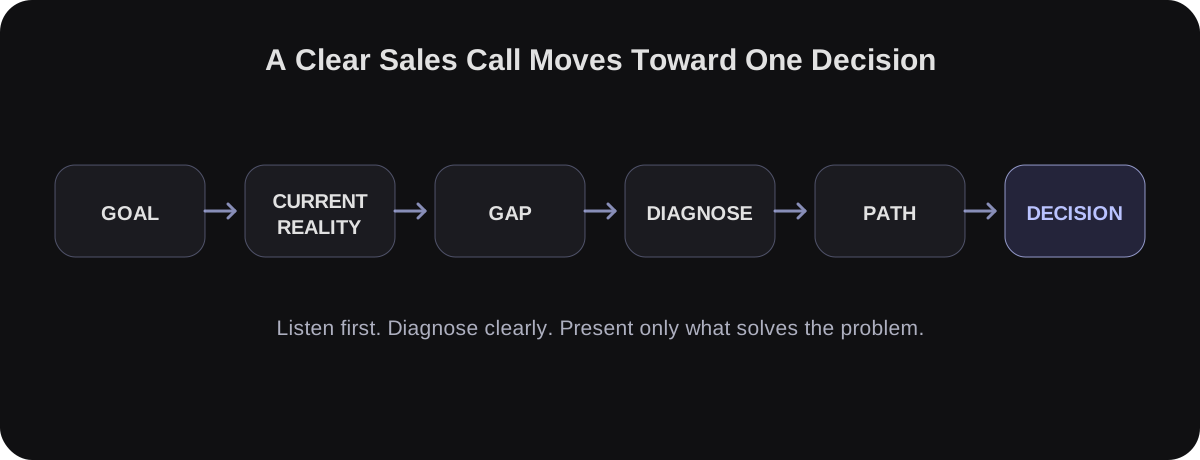
The strongest online fitness coaching sales calls are structured without becoming mechanical. They move from goal, to reality, to gap, to diagnosis, to a relevant recommendation, and finally to a clear decision.
If your calls feel inconsistent, do not start by memorizing clever closing lines. Build a repeatable conversation, qualify the right people before they book, listen closely enough to diagnose the real problem, and track what happens after each call. That creates a sales process you can actually improve.
Build a more predictable online fitness coaching business
Kinetic AI's Growth Partnership helps online fitness coaches identify what is holding growth back, build the strategy and systems around it, and review the numbers so the next priority is clear.
DM “DOUBLE” on Instagram →