Instagram DM Bot for Fitness Coaches: What It Should Do Before Booking a Call
Learn the difference between an Instagram auto-reply, rule-based chatbot, and AI DM bot, plus the qualification and booking logic fitness coaches actually need.
 Written by Dylan StottFounder of Kinetic AI
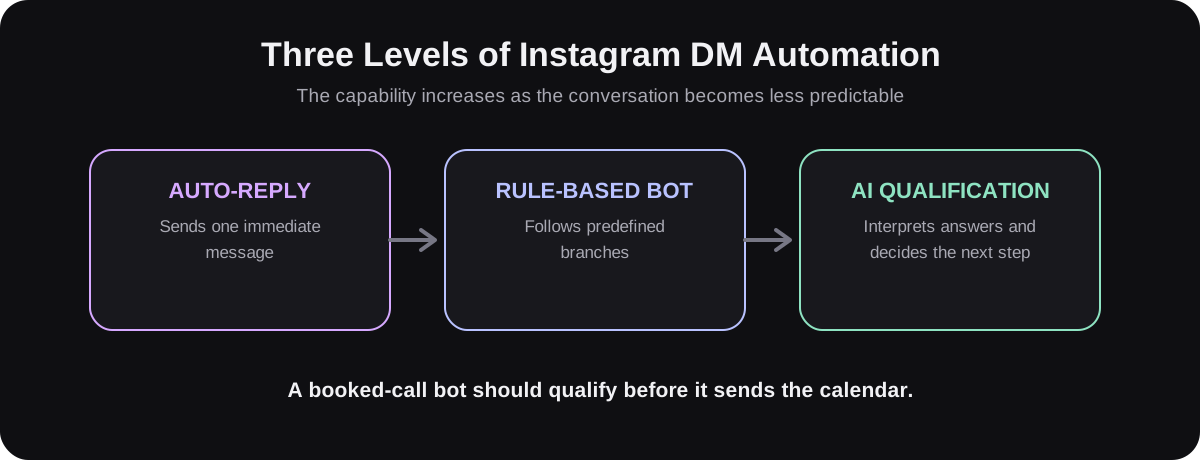
An Instagram DM bot can mean three very different products: a single automatic reply, a rule-based chatbot, or an AI system that understands the conversation and decides what should happen next.
For a fitness coach who sells through calls, the distinction matters. An instant response can save time, but sending every curious person to the calendar can create low-quality calls, no-shows, and more administrative work.
The useful standard is not whether the bot sends messages. It is whether it helps the coach move the right prospects toward a prepared sales conversation.
The three levels of Instagram DM automation
Most confusion disappears when the systems are separated by what they can decide.
- ✓Basic auto-reply: sends one predetermined response after a trigger
- ✓Rule-based chatbot: follows branches based on buttons, keywords, conditions, and saved fields
- ✓AI qualification and booking system: interprets open-ended answers, continues the conversation, evaluates fit, and moves the lead toward the appropriate next step
Level 1: a basic Instagram auto-reply
A basic auto-reply solves speed. It can acknowledge a keyword, deliver a link, answer an FAQ, or tell the person when a human will respond.
This is valuable when the task is predictable. It is not lead qualification. The same message is sent whether the person is an ideal coaching prospect, an existing client, a spam account, or somebody requesting free advice.
- ✓Good for: greetings, away messages, FAQs, lead magnets, and simple links
- ✓Weak for: open-ended qualification, objection handling, booking decisions, and lead status
- ✓Typical tools: Meta Business Suite, ManyChat Free, Chatfuel's free comment auto-DM
Level 2: a rule-based Instagram chatbot
A rule-based chatbot adds structure. It can ask a question, offer buttons, save an answer, branch on conditions, apply tags, and send a booking link after the lead reaches a defined step.
The approach is reliable when the expected answers fit the options. It becomes fragile when prospects use unexpected language, ask questions out of order, or provide information that does not match a branch.
Rule-based flows are often the right choice for lead magnets and simple applications. They require more design for a natural coaching conversation.
- ✓Good for: predictable funnels, button-based segmentation, tags, and structured applications
- ✓Weak for: nuanced answers and conversations that do not follow the planned order
- ✓Typical tools: ManyChat, HighLevel workflows, and traditional chatbot builders
Level 3: an AI Instagram DM bot
An AI DM bot can interpret open-ended messages and use the context to decide what to ask next. The useful version is not an unbounded assistant that says anything. It is an agent with a clear purpose, knowledge, boundaries, qualification criteria, and handoff rules.
For fitness coaching, the AI should understand the person's goal, current obstacle, timeline, coaching preference, and practical fit. It should answer relevant questions, avoid medical advice outside scope, and send the calendar only when a call is sensible.
- ✓Good for: natural language, dynamic follow-up questions, qualification, and contextual handoff
- ✓Risks: vague instructions, unsupported promises, poor boundaries, and inconsistent booking decisions
- ✓Typical tools: AI features inside general platforms, Chatfuel, respond.io AI Agents, HighLevel Conversation AI, and specialized systems such as Kinetic AI
What the bot should learn before booking a call
A coach does not need a 20-question application in the DMs. The bot needs enough information to decide whether a sales call is a reasonable next step and to prepare the coach for that call.
- ✓Goal: what meaningful outcome does the person want?
- ✓Obstacle: what is preventing progress now?
- ✓Context: what have they tried and what happened?
- ✓Timeline: why are they considering action now?
- ✓Service fit: are they looking for the type of coaching offered?
- ✓Practical fit: does the situation match the coach's stated criteria?
- ✓Intent: are they exploring, requesting support, or ready to discuss coaching?
A simple qualification sequence
The conversation should feel like a helpful exchange, not an interrogation. Ask one question at a time and acknowledge the answer before continuing.
- ✓Trigger: the prospect sends a keyword, replies to a story, comments, or asks about coaching
- ✓Acknowledge: confirm why they reached out
- ✓Goal: ask what they want to change
- ✓Obstacle: ask what is making that difficult
- ✓Context: clarify relevant experience, timeline, or constraints
- ✓Fit: decide whether coaching and a call make sense
- ✓Transition: explain why the call is the next step, then send the link
Example: from keyword to qualified booking
Lead: COACH
Bot: Glad you reached out. What is the main result you are trying to achieve right now?
Lead: I want to lose about 25 pounds, but my work schedule is all over the place.
Bot: That makes sense. What has been the hardest part of staying consistent when work gets busy?
Lead: I miss workouts and then eat whatever is easiest at night.
Bot: Understood. Are you looking for a structured online coaching program with training, nutrition, and accountability, or mainly a one-time plan?
Lead: Full coaching. I need the accountability.
Bot: Based on what you shared, a short call would be the best way to understand your schedule and see whether the program fits. Here is the calendar.
What should happen after the booking link is sent?
Sending the link is not the end of the workflow. The system should distinguish between a link sent, a link clicked, and an appointment actually scheduled.
After a booking, the lead status should update, unnecessary follow-up should stop, and the coach should receive the conversation context. Confirmation and reminders should reinforce the value of the call without restarting the qualification conversation.
- ✓Track whether the appointment was actually booked
- ✓Record the date and time
- ✓Stop unbooked-lead reminders after the booking
- ✓Send a clear confirmation
- ✓Provide the coach with the goal, obstacle, fit, and key answers
- ✓Send appropriate reminders before the call
- ✓Track attendance and outcome
What the bot should not do
Automation creates risk when it acts beyond the coach's service, promises results, or pushes people forward without enough context.
- ✓Diagnose injuries, conditions, or symptoms
- ✓Give medical advice outside the coach's credentials
- ✓Guarantee weight loss, income, or another result
- ✓Pretend to be the human coach when transparency is required
- ✓Send a calendar to every person regardless of fit
- ✓Continue promotional follow-up outside permitted messaging windows
- ✓Collect sensitive information that is not needed
- ✓Argue with, pressure, or shame a prospect
Metrics that show whether the bot is working
Count outcomes across the complete path. A high number of automated replies can hide a weak sales system.
- ✓New inbound conversations
- ✓Reply rate after the first automated message
- ✓Qualification completion rate
- ✓Qualified-lead rate
- ✓Booking links sent
- ✓Qualified-lead booking rate
- ✓Show rate
- ✓Close rate on attended qualified calls
- ✓Revenue per inbound conversation
Related reading
Which type of bot should a fitness coach use?
Use an auto-reply when the task is only to acknowledge, answer a common question, or deliver a resource. Use a rule-based chatbot when the expected path is predictable and buttons or conditions can handle most answers.
Use an AI qualification system when prospects speak naturally, the next question depends on context, and the calendar should be protected by a real fit decision.
Kinetic AI is designed for the third use case. It focuses on fitness-specific conversations, Calendly booking, booking-status tracking, call preparation, confirmation, and reminders rather than broad chatbot campaigns.
Final takeaway
A basic auto-reply responds. A rule-based chatbot guides a predefined path. An AI qualification and booking system interprets the conversation and decides what should happen next.
For fitness coaches, the valuable bot is not the one that books the most people. It is the one that creates enough qualified calls while protecting the coach's time and preserving the context needed to sell well.
Design the qualification criteria first. Then choose the simplest technology capable of enforcing them consistently.
Turn Instagram DMs into booked calls
Kinetic AI helps personal trainers reply to new leads, qualify them, send booking links, and track booked calls automatically.
Get 5 Booked Calls Free →