Online Fitness Coaching Client Onboarding: How to Create a Strong First 30 Days
A step-by-step online fitness coaching client onboarding system for setting expectations, collecting information, creating early wins, and building a strong first 30 days.
 Written by Dylan StottFounder of Kinetic AI
Signing the client is not the end of the sales process. It is the beginning of the experience they now expect you to deliver.
A new online fitness coaching client usually arrives with a mix of motivation, uncertainty, and incomplete information. They may be excited to start but unclear about what happens next, how quickly they should expect progress, what they need to track, when the coach will reply, or what to do when the first difficult week arrives.
A strong onboarding process removes that uncertainty. It gives the coach the information needed to make good decisions, gives the client a clear first plan, and creates a repeatable rhythm before motivation fades or small misunderstandings become cancellations.
What is online fitness coaching client onboarding?
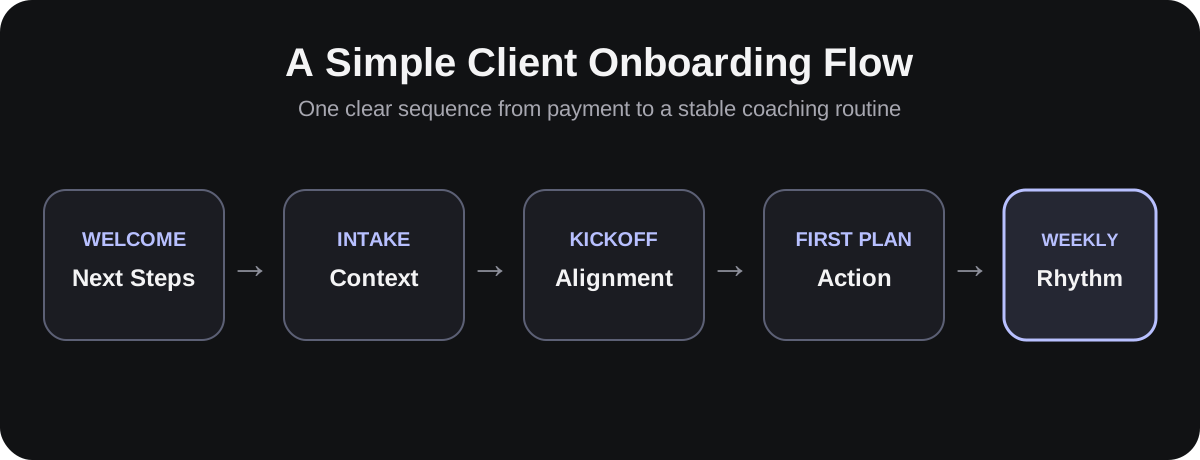
Client onboarding is the documented sequence that moves a new client from payment and agreement into a stable coaching routine. It includes the welcome, intake, appropriate screening and agreements, kickoff conversation, baseline assessment, first program, communication expectations, and early reviews.
Onboarding is complete when the client understands the plan, knows how to use the coaching system, has begun taking the right actions, and knows what will happen next. Sending an app invitation and a questionnaire is only part of that process.
- ✓Confirm the purchase and explain the next steps
- ✓Collect the information needed to coach responsibly
- ✓Clarify the goal, starting point, constraints, and expectations
- ✓Deliver a realistic first plan
- ✓Establish communication and check-in routines
- ✓Create an early sign that the coaching relationship is working
What should the first 30 days accomplish?
The first month does not need to produce the client's final transformation. It needs to create clarity, confidence, consistency, and useful evidence.
By day 30, the client should understand why the plan looks the way it does, know which actions matter most, feel comfortable communicating with the coach, and see at least one meaningful sign of progress. That progress may be improved training consistency, better meal structure, higher energy, stronger lifts, better measurements, or fewer decisions being left to chance.
- ✓Clarity: the client knows what to do and why
- ✓Confidence: the client believes the plan fits their situation
- ✓Consistency: the core actions are becoming repeatable
- ✓Evidence: progress is visible enough to reinforce commitment
Start onboarding immediately after the client says yes
The period immediately after purchase carries momentum. A delayed or disorganized handoff can make a confident decision feel uncertain within hours.
Send one clear welcome message that confirms the purchase, states what the client should complete first, gives a realistic timeline for receiving the initial plan, and explains how to get help. Avoid sending several disconnected emails, links, and forms with no order.
- ✓Confirm that payment and the coaching agreement were received
- ✓Provide one ordered onboarding checklist
- ✓State which forms must be completed before programming begins
- ✓Give the date or condition for receiving the first plan
- ✓Explain where normal questions should be sent
- ✓Book the kickoff call when the service includes one
Related reading
Collect the information needed to coach the person, not just the goal
A useful intake form gives the coach enough context to design a realistic plan without forcing the client to complete a long questionnaire filled with information that will never be used.
The goal is to understand the client's desired outcome, current behavior, training history, available equipment, schedule, food environment, injuries or limitations, previous attempts, preferences, and likely obstacles. The coach should be able to explain how each important question will affect the plan.
- ✓Primary goal and why it matters now
- ✓Training experience, current routine, and available equipment
- ✓Schedule, travel, work demands, and family constraints
- ✓Nutrition habits, preferences, allergies, and practical limitations
- ✓Relevant health history, injuries, symptoms, and medications
- ✓Previous approaches and why they were difficult to sustain
- ✓Preferred communication style and accountability needs
- ✓Starting measurements or progress indicators that fit the goal
Complete appropriate screening, consent, and service agreements
Online coaching still requires a responsible start. Use health screening, informed-consent, waiver, and service-agreement documents that are appropriate for your credentials, service, jurisdiction, and the client's situation.
A preparticipation tool such as the PAR-Q+ may help identify when further information or medical clearance is appropriate, but it should not be treated as a substitute for professional judgment or local requirements. When the intake reveals symptoms, conditions, or needs outside the coach's scope, pause and refer the client to a qualified healthcare professional.
Store sensitive information in a secure system, restrict access to people who genuinely need it, and avoid collecting data simply because a template includes the field.
- ✓Health and exercise-readiness screening
- ✓Informed consent and acknowledgement of risk
- ✓Coaching agreement, payment terms, and cancellation policy
- ✓Emergency contact information when appropriate
- ✓Permission for testimonials, photos, or data only when separately agreed
- ✓Referral or medical-clearance process for concerns outside scope
Use the kickoff call to create alignment, not repeat the intake form
The kickoff call should not be a verbal version of the questionnaire. The coach should review the intake beforehand and use the conversation to clarify what matters, resolve contradictions, and agree on how the coaching relationship will work.
This is the moment to connect the client's goal to a practical plan. Explain the likely obstacles, the first priorities, what progress will be measured, and what the client should expect when a week does not go perfectly.
- ✓Confirm the desired outcome and why it matters
- ✓Clarify the starting point and the largest current constraint
- ✓Agree on the minimum actions required during a difficult week
- ✓Explain the first phase of the plan and what it is designed to learn
- ✓Set realistic expectations for pace and variability of progress
- ✓Confirm communication, check-in, and adjustment procedures
Define what success will look like before progress becomes emotional
Clients often judge a program by the most visible result, especially body weight. That can create unnecessary doubt when normal fluctuations hide real progress.
Agree on a small set of indicators connected to the goal. Include outcome measures, but also track behaviors and performance signals that reveal whether the process is working before the final result appears.
- ✓Outcome measures such as body weight, measurements, photos, or performance
- ✓Behavior measures such as completed workouts, protein targets, steps, or sleep routine
- ✓Capacity measures such as strength, work capacity, mobility, or pain-free movement
- ✓Experience measures such as energy, confidence, hunger, stress, and plan difficulty
Establish a useful baseline without overwhelming the client
A baseline should help the coach make decisions and help the client recognize change. It should not become a test the client feels they must pass before coaching begins.
Choose only the assessments that affect programming or progress evaluation. A beginner may need basic movement observations, training history, schedule, and a few starting metrics. An advanced performance client may require more detailed testing. More data is not automatically better if it does not change the plan.
- ✓Current training frequency and recent exercise exposure
- ✓Relevant movement or technique videos
- ✓Starting loads, repetitions, or performance markers
- ✓Body measurements or photos when appropriate and agreed
- ✓Typical food intake or meal-pattern information
- ✓Average steps, sleep, energy, and schedule constraints
Deliver the first plan with less complexity than you think
The first program is not a demonstration of how much the coach knows. It is a starting hypothesis that the client can understand and execute.
A complicated plan creates more opportunities for confusion, missed tasks, and false failure. Start with the few actions most likely to create progress and reveal useful information. Complexity can be added when the client has earned it through consistency or when the data shows it is necessary.
- ✓A realistic training schedule based on the client's actual week
- ✓Clear exercise instructions, substitutions, and effort guidance
- ✓A simple nutrition priority rather than several simultaneous rules
- ✓A minimum version of the plan for difficult days
- ✓A short explanation of what the first phase is designed to accomplish
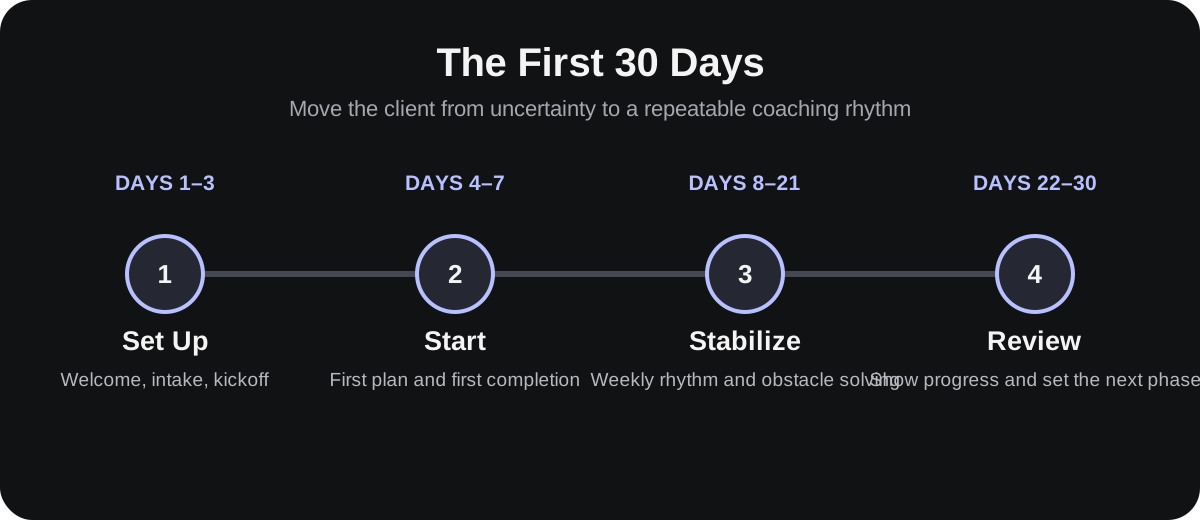
Days 1 to 7: remove friction and create the first completion
The first week should prove that the client can use the system and complete the plan. The coach should look for confusion, technical problems, unrealistic scheduling, exercise pain, excessive soreness, and tasks the client is repeatedly avoiding.
An early check-in does not need to be long. A short message after the first workout or first few days can catch problems before the client spends a full week doing the wrong thing or quietly disengaging.
- ✓Confirm access to the app, plan, resources, and check-in form
- ✓Review the first completed workout or submitted technique video
- ✓Resolve unclear exercises, targets, or nutrition instructions
- ✓Celebrate completion rather than demanding perfect execution
- ✓Adjust immediately when the plan clearly does not fit the schedule
Days 8 to 14: build a repeatable weekly rhythm
Once the client can complete the basic plan, the next goal is consistency. Help them place the actions into their real week instead of relying on daily motivation.
Use the first formal check-in to identify where the plan worked, where it created friction, and whether the client understood the purpose of the priorities. Change the plan when needed, but avoid replacing the entire strategy because of one imperfect week.
- ✓Confirm the most realistic training days and backup options
- ✓Identify the meal, time of day, or environment causing the most difficulty
- ✓Review adherence without turning the check-in into a scorecard of failure
- ✓Reinforce the one or two behaviors producing the greatest value
- ✓Make one focused adjustment instead of several reactive changes
Days 15 to 21: solve the first predictable obstacle
By the third week, the client's initial excitement may be lower and real-life obstacles become more visible. This is useful information, not evidence that onboarding failed.
The coach should help the client handle the first disrupted week, social event, travel day, low-motivation period, or stalled metric without abandoning the plan. The lesson is larger than the individual event: the client learns that the system can adapt without collapsing.
- ✓Use minimum effective actions during unusually difficult weeks
- ✓Create substitutions for travel, equipment, or schedule changes
- ✓Separate a normal fluctuation from a real programming problem
- ✓Show the client how to recover from a missed action without starting over
- ✓Document the solution so it can be reused later
Days 22 to 30: review the evidence and clarify the next phase
The first-month review should show the client what changed, what was learned, and what will happen next. Do not assume they can see the same pattern the coach sees.
Compare the starting point with the current evidence. Highlight wins, identify the largest remaining constraint, and explain why the next phase of training or nutrition is changing or staying the same. A clear review turns activity into a coherent coaching experience.
- ✓Review progress against the agreed outcome and behavior measures
- ✓Name the strongest improvement from the first month
- ✓Explain what the data revealed about the client
- ✓Identify the next priority and why it matters
- ✓Confirm whether expectations, support, or communication need adjustment
- ✓Give the client a clear picture of the next four weeks
Create early wins that support the final outcome
An early win should not be manufactured or disconnected from the client's real goal. It should show that the client is moving in the right direction and that the coaching process is reducing a meaningful problem.
The best early win is often improved control: the client completes three planned workouts, prepares a repeatable breakfast, stops skipping lunch, learns two core exercises, or handles a difficult weekend without abandoning the week. Those changes create momentum because they make the eventual result more believable.
- ✓Complete the first full training week
- ✓Improve one recurring meal or nutrition decision
- ✓Reach a technique or strength milestone
- ✓Reduce uncertainty about what to do on busy days
- ✓Create a visible progress trend using agreed measurements
- ✓Solve one obstacle that defeated previous attempts
Build a check-in system that produces decisions
A check-in is useful when it helps the coach decide what to reinforce, investigate, or change. A long form filled with repeated questions can create work without creating insight.
Ask for the information needed to evaluate adherence, recovery, progress, difficulty, and upcoming constraints. Then respond with a clear summary: what is working, what needs attention, what is changing, and what the client should focus on next.
- ✓Actions completed and actions repeatedly missed
- ✓Training performance, soreness, pain, and recovery
- ✓Nutrition adherence, hunger, digestion, and difficult situations
- ✓Sleep, stress, energy, schedule changes, and upcoming events
- ✓Progress metrics connected to the goal
- ✓The client's biggest question or obstacle for the next week
Set communication boundaries before they become a problem
Clients should know where to message, when the coach normally responds, what belongs in the weekly check-in, and what to do when an urgent health concern appears.
Clear boundaries do not make coaching less supportive. They make the support dependable. Promising constant access may feel generous during the sale, but inconsistent availability later damages trust more than a reasonable response window stated from the beginning.
- ✓Primary communication channel
- ✓Normal response window and non-working days
- ✓How technique reviews and plan-change requests are handled
- ✓What should wait for the weekly check-in
- ✓What requires a healthcare professional or emergency service rather than a coach
Automate administration without automating the relationship
Templates and automation can make onboarding more consistent. They are useful for welcome messages, form delivery, reminders, app instructions, scheduling, and internal task creation.
The parts requiring judgment should remain personal. The kickoff conversation, interpretation of health and lifestyle context, programming decisions, feedback, and first-month review should reflect the individual client. Automation should prevent steps from being forgotten, not make every client feel identical.
- ✓Automate confirmations, reminders, form delivery, and task creation
- ✓Use templates for structure, then personalize the relevant details
- ✓Keep sensitive decisions and coaching feedback under human review
- ✓Create an internal checklist so every required step has an owner and deadline
- ✓Review the process regularly for steps that create confusion or unnecessary work
Common online fitness coaching onboarding mistakes
Most onboarding problems are not caused by a missing piece of software. They come from unclear sequencing, excessive complexity, weak expectations, or poor follow-through.
- ✓Waiting several days after payment to send the next steps
- ✓Sending too many links and forms without a clear order
- ✓Using an intake form but failing to review it before the kickoff call
- ✓Collecting sensitive information that does not affect coaching
- ✓Skipping appropriate screening, consent, or service agreements
- ✓Starting with a plan that is too demanding or complicated
- ✓Failing to define response times and communication boundaries
- ✓Judging the first month only by weight or appearance
- ✓Making several reactive changes after one imperfect week
- ✓Never showing the client what improved or what comes next
Online fitness coaching client onboarding checklist
Use this checklist as a quality-control tool, not as another list to send to the client. The client should experience one clear sequence while the coach manages the operational detail behind it.
- ✓Payment, agreement, and purchase confirmation completed
- ✓Welcome message and ordered next steps sent
- ✓Intake, screening, consent, and required documents completed
- ✓Client information reviewed before the kickoff conversation
- ✓Kickoff call completed and expectations confirmed
- ✓Baseline measures and progress indicators selected
- ✓First plan delivered with instructions and substitutions
- ✓Communication channel and response window confirmed
- ✓Early first-week check completed
- ✓Weekly check-in rhythm established
- ✓First predictable obstacle addressed
- ✓Day-30 progress review and next phase completed
Where Kinetic AI fits before onboarding begins
Kinetic AI is designed for the stage before client onboarding. It helps online fitness coaches respond to inbound Instagram leads, ask qualification questions, send the booking link when a call makes sense, follow up, and track the path to a booked call.
Once a prospect becomes a paying client, the onboarding system described in this guide becomes the coach's responsibility. Keeping those stages distinct creates a cleaner handoff: the acquisition system produces a qualified opportunity, the sales process creates a clear agreement, and onboarding turns that agreement into a strong client experience.
Final takeaway
A strong first 30 days gives the client more than a program. It gives them a clear path, realistic expectations, dependable communication, and evidence that the coaching relationship is helping them move forward.
Start immediately after the sale. Collect only the information needed to coach well, complete appropriate screening and agreements, align on the goal and process, deliver a simple first plan, and review progress before the end of the first month.
The goal is not a perfect onboarding experience with more forms, videos, and software. The goal is a client who knows what to do, trusts the process, communicates openly, and enters month two with stronger momentum than they had on day one.
Kinetic Growth Partnership
Build a more predictable online fitness coaching business
The Growth Partnership helps online fitness coaches identify the constraint limiting growth, build the missing strategy and systems around it, and review the numbers so the next priority stays clear.